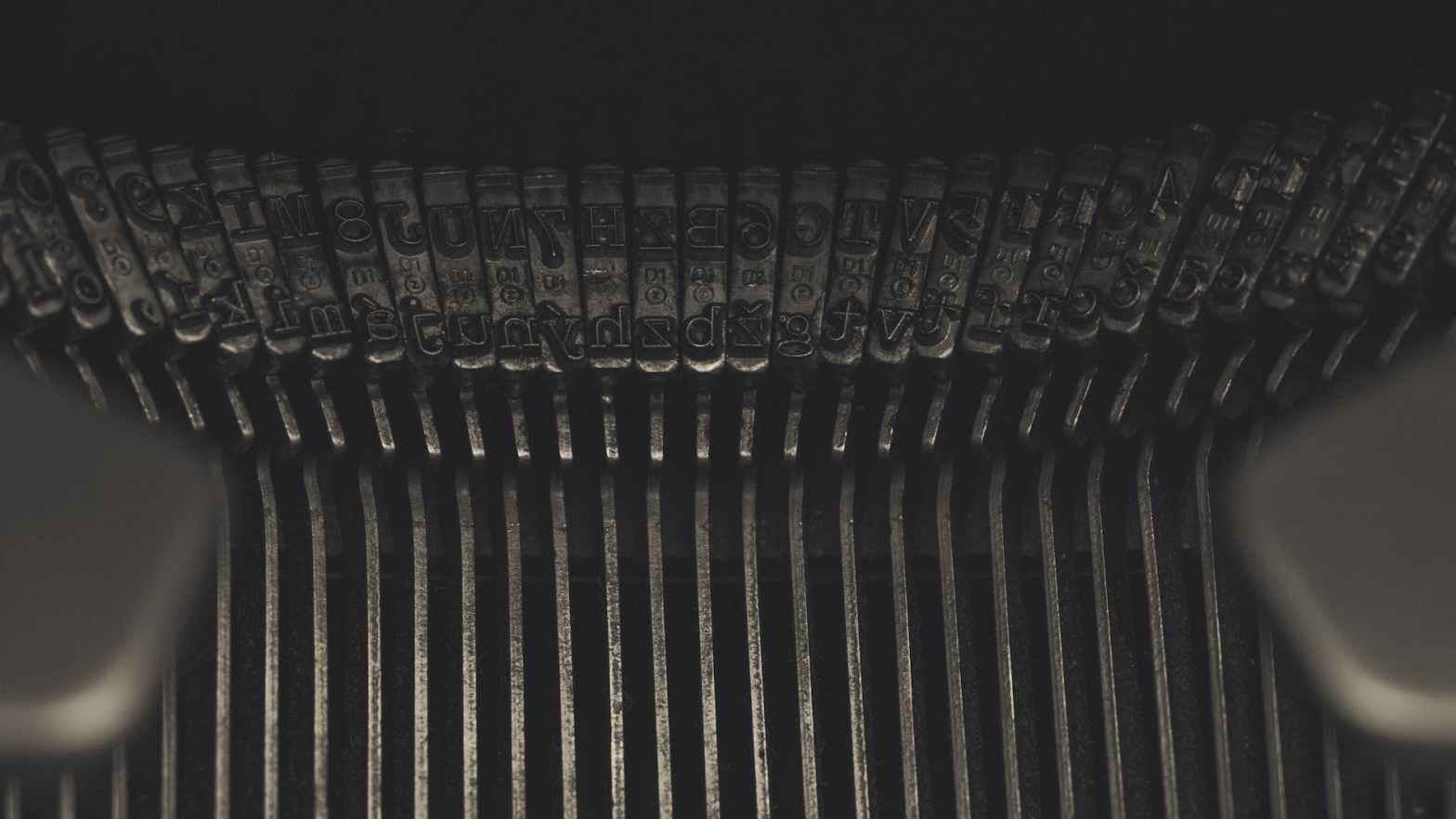
At the age of 147, Jacob is in his final days. He calls his sons to himself and blesses each one—although some of the blessings sound like curses as he notes their colossal failures. Jacob reserves the greatest blessing for Judah, which reads in part:
“The SCEPTER will not depart from Judah or the STAFF from between his feet until He whose right it is comes and the obedience of the peoples belongs to Him” Genesis 49:10.
This is a Messianic prophecy. Not only will David and most of the nation’s kings come from Judah, but the Messiah will descend from Judah.
Why bless Judah? He was a scheming, ruthless man. But he did one great thing that not only endeared him to Jacob, but made him a “TYPE” of Christ. A type is a prophetic symbol of someone coming in the future, ‘type’ being the word for an impression left behind by a stamp or by the tiny letters sculpted on the type bars of an old typewriter. When Judah’s life strikes the page, it leaves a print that matches Jesus. Judah’s life points to Jesus.
But when? When does Judah ever look like Jesus? Judah is “Christ-like” when he offers his own life as a substitute for the life of his brother Benjamin. In that moment, Judah becomes a TYPE of the Savior who would offer His life as a substitute for ours. This is Judah’s greatest moment; this is why Jacob blesses Judah and God makes him the father of a race of kings, culminating in the birth of the KING OF KINGS, who to this day is known as “THE LION OF THE TRIBE OF JUDAH” Revelation 5:5. (Learn the phrase “type of Christ.” There are dozens of other people who are types of Christ, including Isaac on the altar, Joseph, Moses, and David.)
Judah’s one great shining moment is also his chance to redeem his past. Perhaps he has learned his lesson, finally doing something selfless and noble. Some of his brothers may never have learned.
God, give us the integrity of Joseph. But when we lack it, help us move past our failures and make new and better choices as Judah did. Remind us it’s never too late to change.
ΑΩ
 Household Words: