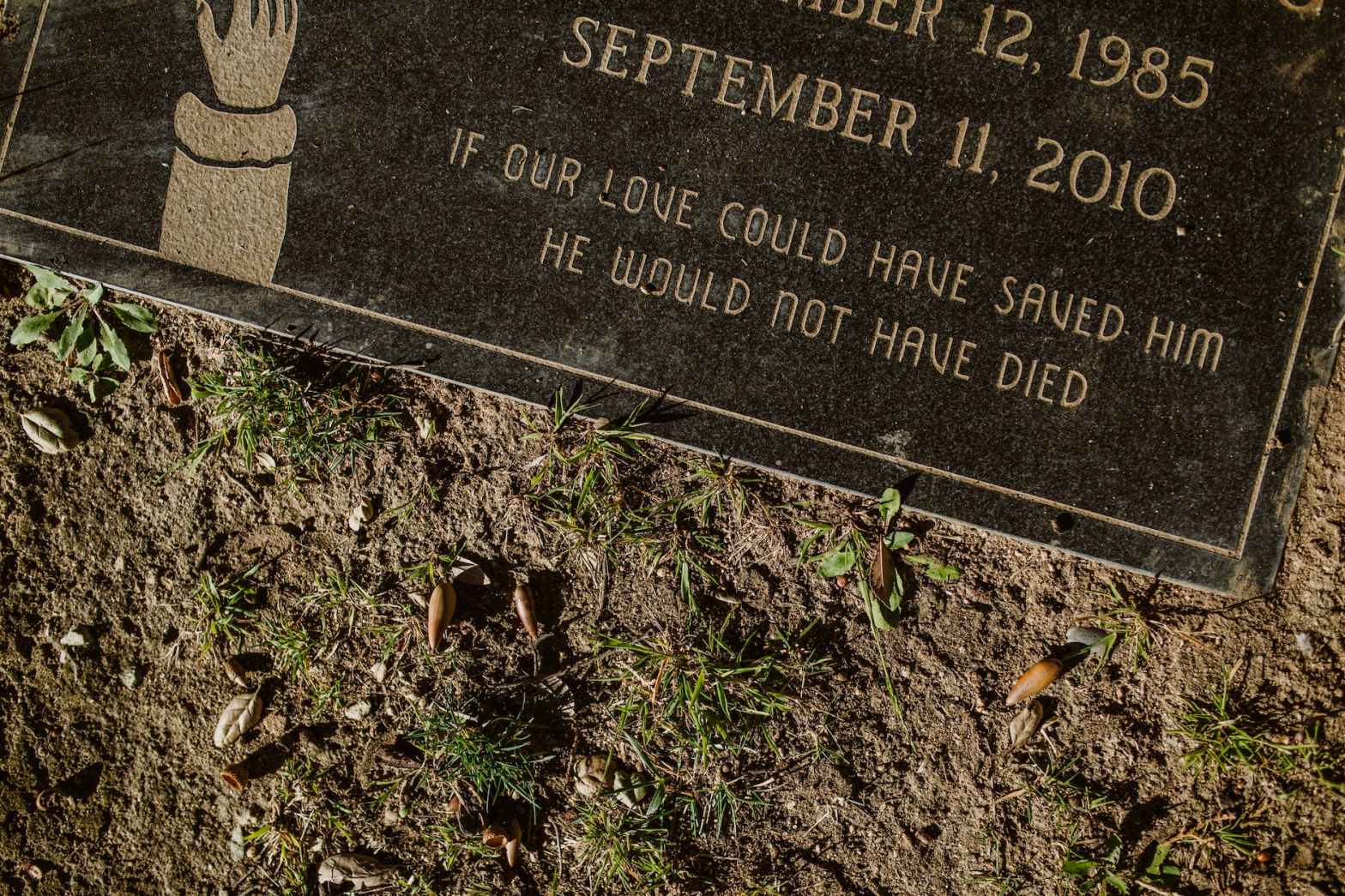
MLK’s epitaph says “Free at Last, Free at Last, Thank God Almighty, I’m Free at Last.” Frank Sinatra’s says “The Best is Yet to Come.” (Not “I Did it My Way.”) Mel Blanc’s says “That’s All Folks.” Merv Griffin’s says “I Will NOT Be Right Back After This Message.” Rodney Dangerfield’s says “There Goes the Neighborhood.”
Some epitaphs are a wry commentary written by the departed before his death. But most are sincere tributes from the grieving, such as “loving husband and father.”
King Jehoram was evil and the Bible records quite an epitaph:
“HE DIED TO NO ONE’S REGRET.”
The man became king at 32. First, he slew his six younger brothers to ensure there was no competition for the throne. Then he made Israel worship idols. When he was 38, God sent a disease that caused his intestines to slowly work their way to the outside of his body, and he died from the condition—two years later. Imagine the shame and the stench and humiliation of having your bowels turned inside out! God humbled the king in a dramatic fashion.
The story concludes:
“He reigned eight years in Jerusalem. He died to no one’s regret and was buried in the city of David but not in the tombs of the kings.” 2 Chronicles 21:20.
Do you ever think about what will be said about you when you are gone? I think about it all the time—and it helps me make better decisions.
“The day of death is better than the day of one’s birth. It is better to go to the house of mourning,… for that is the end of all men and the living should take it to heart.” Ecclesiastes 7:1-4.
Think about your death. What do you want people to say about you? How should your life be summed up? Finish this sentence about yourself (changing pronouns as needed):
“He lived his life ________________________________________________
____________________________________________________________
____________________________________________________________
___________________________________________________________.”
ΑΩ
 Household Words: