What sort of man was Pontius Pilate?
Bible scholars believe he was assigned to Israel, not a place any Roman hoped to be, and he was motivated to keep his superiors happy by keeping the peace. He was a politician, willing to do whatever looked best at the time, and if he had doubts, he would say, “I wash my hands of this whole affair,” though the first rule of leadership is that you can’t wash away responsibility. As Harry Truman said, when you are the leader, “the buck stops here.”
Pilate sent an innocent man to his death, and he knew it.
He was without excuse. Consider the points I picked up reading a single day’s entry in the Chronological Bible:
- Pilate knew the Jews handed Jesus over because of envy, Matthew 27:18, Mark 15:10.
- Pilate told the chief priests, “I find no grounds for charging this man,” Luke 23:4.
- He knew Herod likewise saw no grounds for charging Jesus with a crime, Luke 23:15.
- Three times he complained that he could find no reason to charge Jesus with a crime, Luke 23:22.
- After Jesus talked to Pilate and answered all his questions, Pilate “made every effort to release Him,” John 19:17. (He made “every effort,” but he still did not actually release him.)
- He freed Barabbas because “he wanted to please the crowd,” Mark 15:15. (Even leaders are vulnerable to “peer pressure”—particularly when they are greatly outnumbered.)
- Pilate’s wife warned him not to cross Jesus, saying, “Have nothing to do with this righteous man, because last night I suffered much in a dream because of him” Matthew 27:19. (This was probably the first and only time Pilate’s wife attempted to influence him in his work—what did she care about disputes between the Jews? But the Holy Spirit used a dream to get her attention.) Yet even though it was amazing and totally unprecedented, Pilate ignored the warning from his wife. (Every husband needs to learn when to LISTEN to his wife!)
- “When Pilate saw that he was accomplishing nothing, but rather that a riot was starting, he took water and washed his hands in front of the crowd, saying, ‘I am innocent of this Man’s blood; see to that yourselves’” Matthew 27:24. Pilate knew Jesus was innocent and that this was a sham trial shedding innocent blood. Indeed, it was so bad that he literally washed his hands in front of the crowd. He knew it was wrong. He did it anyway.
- In ALL of these things, Pilate was motivated by crowd control and his desire to look good to his superiors. He didn’t want trouble with the locals because it would be reported and he would have trouble with his boss. So he fell back on every skeptic’s favorite question: “what is truth?” It was his way of arguing what so many argue today: there is no right and wrong, really, so I can do whatever works for me. There is no absolute ‘Truth,’ only what is true for me right now….” See John 18:38.
BEWARE of that line of reasoning. People have been falling for that for centuries, but it is particularly popular right now. Yet it is still false.
There IS truth.
There IS right and wrong.
Your choices DO matter. You WILL reap what you sow.
Jesus told Pilate He had come speaking truth and Pilate said, “What is truth?”
This is a fair question for a philosopher, for a lost unbeliever confused by the world of competing religions and philosophies. It makes a certain sense coming from a Roman, considering the mythological gods they half-heartedly believed in.
But on another level, this is a ridiculous question. The existence of truth is obvious to children, is it not? Only adults complicate it so they can hide from it, usually to justify their sins.
Pilate questioned the existence of truth because it is much easier to crucify an innocent man if truth does not exist or if you convince yourself that truth is unknowable. This is lazy thinking, and I suspect Pilate had rattled off the “What is truth” question hundreds of times before—every time someone pushed him to make an honest decision, but political pressures convinced him a dishonest decision would turn out better for him.
But Integrity means obeying the truth—doing what is right—not listening to the crowd.
That’s why integrity (which means “wholeness”) requires courage. Men without integrity are men with missing pieces inside. Often the biggest missing piece is the courage to do the right thing.
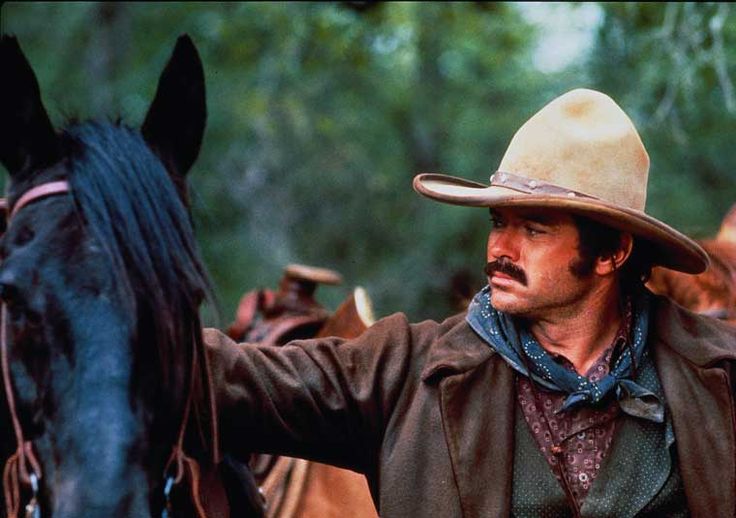
(As Gus McCrae says of Jake Spoon in LONESOME DOVE: “I think Jake’s always been too leaky a vessel for anybody to put much hope in.” Jake Spoon and Pontius Pilate have a lot in common–they are leaky vessels.)
Never let yourself question the truth. Read the Word—the truth—and trust it. Give the Bible the benefit of the doubt. Believe it and trust what it says. You are not Pilate. You are not here to doubt God’s word.
Never assume things in the Bible were written “only for back then” and don’t apply today.
Never. Are you God? Are you an apostle or a prophet or a pastor or missionary? Be honest—who are you to put your own logic above the Bible?
How can you elevate your opinion, probably based only on personal preference, above the sacred Word of God?
Humble yourself before the truth of God’s Word. Ask Him to show you how to read it and understand it. Tell God that you want to submit yourself to the authority of His Word, that you know that He is God and you are not. Ask Him to give you the courage to stand for truth, even when that means standing alone. Ask Him to fill you with the integrity that will make you whole.
Read Luke 23.
ΑΩ
 Household Words: