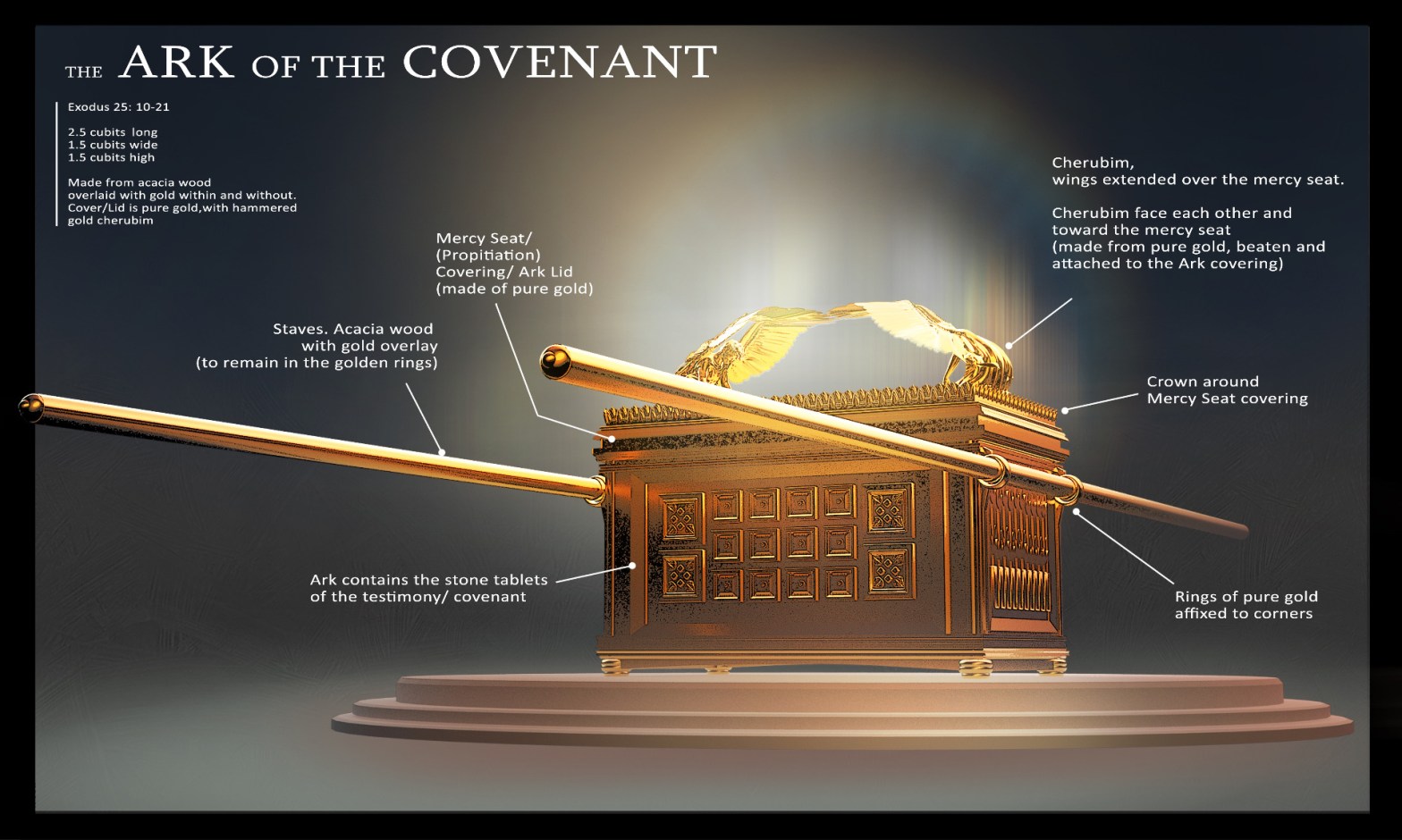
The Ark of the Covenant was the most sacred object of the Hebrew faith. It was a national treasure to be kept in the tabernacle or the temple. But when David became king, the ark had been sitting in the home of Abinadab for twenty years (and God had blessed Abinadab greatly as a result). David wanted to bring the ark to its proper home so God would bless the entire nation.
The young king captured Jerusalem, made it the capital city (re-naming it the “City of David”), and made plans to bring the ark to Jerusalem. This was to be a huge event, a sort of victory parade for the nation to celebrate its new king and to give proper reverence to the God who brought them so far and to the ark, one of God’s most sacred symbols. There were crowds, a band, and the king himself would be playing an instrument and joining in the dancing.
“And they carried the ark of God in a new cart out of the house of Abinadab, and Uzza and Ahio drove the cart. And David and all Israel played before God with all their might and with singing, and with cymbals, and with trumpets. And when they came to the threshing floor of Chidon, Uzza put forth his hand to hold the ark, for the oxen stumbled. And the anger of the Lord was kindled against Uzza, and he smote him, because he put his hand on the ark, and there he died before the Lord. And David was displeased … and David was afraid of God that day, saying, ‘How shall I bring the ark of God home to me’?” 1 Chronicles 13:7-12.
Talk about a public relations debacle!
Instead of a victory party and a return to proper worship and reverence for God and the Ark of God, David has a good man dead on the street, struck down by God in the most public forum possible because he failed to treat the ark with respect. Poor Uzzah was only trying to steady the ark so it would not fall from the cart. But that’s just it—the ark was not supposed to be moved in a cart. The nation had written scripture, scrolls containing God’s word on the handling of the ark and all things sacred. But no one had consulted God’s word. Instead, David allowed his enthusiasm to cause him to rush in and make plans in a sloppy manner, and a man was dead as a result.
While David figured out what to do next, he left the ark in the home of Obed-Edom, and God blessed Obed-Edom and all he owned, 1 Chronicles 13:13-14. Further, David “perceived that the Lord had confirmed him king” because God was blessing his kingdom both at home and abroad, 1 Chronicles 14:2, 17. David realized God was not mad at him or standing in heaven waiting to throw a thunderbolt at David. God was blessing him. But David understood the people needed to consult God’s word and obey God’s laws.
“Then David said, ‘None ought to carry the ark of God but the Levites, for them hath God chosen to carry the ark’” 1 Chronicles 15:2.
David admitted it was done incorrectly the first time, 1 Chronicles 15:13. The second time, David read the scripture and made sure it was obeyed. He sent the right people (Levites) to move the ark the right way—not on a cart but hanging from poles suspended between the shoulders of four men. Such a method of transport ensured no one would make the mistake of carelessly touching the holiest object on earth.
“So David went and brought the ark of God from the house of Obed-Edom into the city of David with gladness. And it was so, that when they that bare the ark of the Lord had gone six paces, he sacrificed oxen and fatlings. And David danced before the Lord with all his might” 2 Samuel 6:12-14.
The second time around, the nation did things the right way. David’s enthusiasm was tempered temporarily, but he must have been thrilled with the final result, knowing that when the ark finally arrived in Jerusalem, it was done properly and God was truly pleased with his people. David, the musician-king, sang a great song of worship to mark the occasion. One line seems to capture what might be learned from the death of Uzzah:
“Worship the Lord in the beauty of holiness. Fear before him, all the earth” 1 Chronicles 16:29-30.
Jesus tells us to worship the Father “in Spirit and in Truth,” John 4:24. We must worship with enthusiasm, but we must also worship according to the truth of God’s word. Worship with enthusiasm but also with the fear of the Lord.
God, may our enthusiasm be tempered by knowledge of your word. Bless us with the joy of the Lord and the fear that would help us live holy lives. Thank you for the mysteries of forgiveness, grace, regeneration, and holiness. May we please you with worship that is enthusiastic but also reverent and sacred. Give us hearts filled with Godly, holy, and joy-filled worship that loves and welcomes everyone.
ΑΩ
 Household Words: