Reading Old Testament highlights can give the impression God loves to pour out his wrath. In fact, there is a popular notion that the God of the Old Testament is different from the God of the New Testament. Some personify it: God the Father is angry and full of wrath, but God the Son is merciful and compassionate. Such a view makes it difficult to read the Old Testament. You must overcome this if you are going to know God’s word.
The Bible contradicts the idea that God changes between the testaments:
“I am the Lord and I do not change” Malachi 3:6.
“Jesus Christ is the same yesterday, today, and forever” Hebrews 13:8.
It may surprise you, but the God of the Old Testament is full of compassion. For example, Psalm 136 repeats twenty-six times the refrain: “His lovingkindness is everlasting” Psalm 136:1-26.
Similarly, Jesus, the “God of the New Testament,” will bring a sword of judgment when he returns, Revelation 19:15.
God is one. God the Father is as compassionate as Jesus—and Jesus is as holy and full of wrath as God the Father.
But does God enjoy pouring out his wrath? No.
“‘As I live,’ declares the Lord, ‘I take no pleasure in the death of the wicked, but rather that they turn from their wicked ways and live’” Ezekiel 33:11.
God is full of compassion, as Jesus demonstrated by loving children, healing the sick, and dying on the cross. That is God’s personality, John 1:18. And Jesus takes no pleasure in the deaths of the wicked, but wants them to repent and live. God is one. God the Father, God the Son, and God the Holy Spirit, are one and share both ‘Old Testament’ holiness and ‘New Testament’ compassion.
Nevertheless, it is easy for readers of some of these “wrath highlights” to think the Old Testament is the story of a God of anger:
In Genesis, God sent a flood to wipe out most of humanity, Genesis 6:7.
Later, God sent fire to wipe out the people of Sodom and Gomorrah, Genesis 19:24-29.
Still later, God sent a death angel to slay the first-born of Egypt, Exodus 12:29.
God even judged his own people, causing the earth to open up and swallow those who questioned the authority of Moses, Numbers 16:31-35.
And as if that were not enough, God sent his people into the Promised Land with orders to kill the pagans living there, Deuteronomy 20:16-18.
Even the worship songs in the Book of Psalms include such notions: “May the desert tribes kneel before him, and may his enemies lick the dust” Psalm 72:9. That does seem an odd song lyric, to a modern ear:
May His enemies lick the dust!
But today’s readers are trapped in today’s culture. The Bible record is thousands of years old, yet we evaluate it through a 21st-century lens. We bring modern, Western notions of justice, fairness, and right and wrong to the Bible (an ancient, Eastern text) then we accuse God of wrongdoing when his actions confuse us.
If you are committed to a position of skepticism, I may not be able to help you. But if you love God and are simply looking for answers, here are some thoughts:
First, give God the benefit of the doubt. Pray and ask Him to help you understand—but realize that you also need to be willing to trust Him. You need to accept that his ways are higher than our ways, Isaiah 55:9. (And remember that thousands of years passed between some of these judgments. God pours out so much more mercy than wrath.)
Second, remember that God is holy. He wants holiness for his people. He cannot tolerate sin. But some sins are far worse than others[1], and the sins of Noah’s time are the kinds of sins God will not overlook forever, but will punish.
Third, try to look at death from God’s perspective. God is eternal. He exists outside of time. Our finite lives are infinitely short to Him. Heaven is your real home—and that home will last forever. Whether you get to heaven now or fifty years from now will not be as big a deal looking back from heaven as it seems to be from earth. For example, if your life or mine were tragically cut short, it is likely neither of us would choose to leave heaven and return to earth. As Paul said, it’s better there: “To die is gain … I desire to depart and be with Christ, which is far better indeed” Philippians 1:21-23.
To die is gain. It is better there.
When Jesus talked about heaven, he pointed out that Abraham, Isaac, and Jacob are there–and they are still alive! Heaven is the place where no one is dead:
“Those who are considered worthy to take part in … the resurrection from the dead … can no longer die … but in the account of the burning bush, even Moses showed that the dead rise, for he calls the Lord ‘the God of Abraham, and the God of Isaac, and the God of Jacob [speaking in the present tense] …
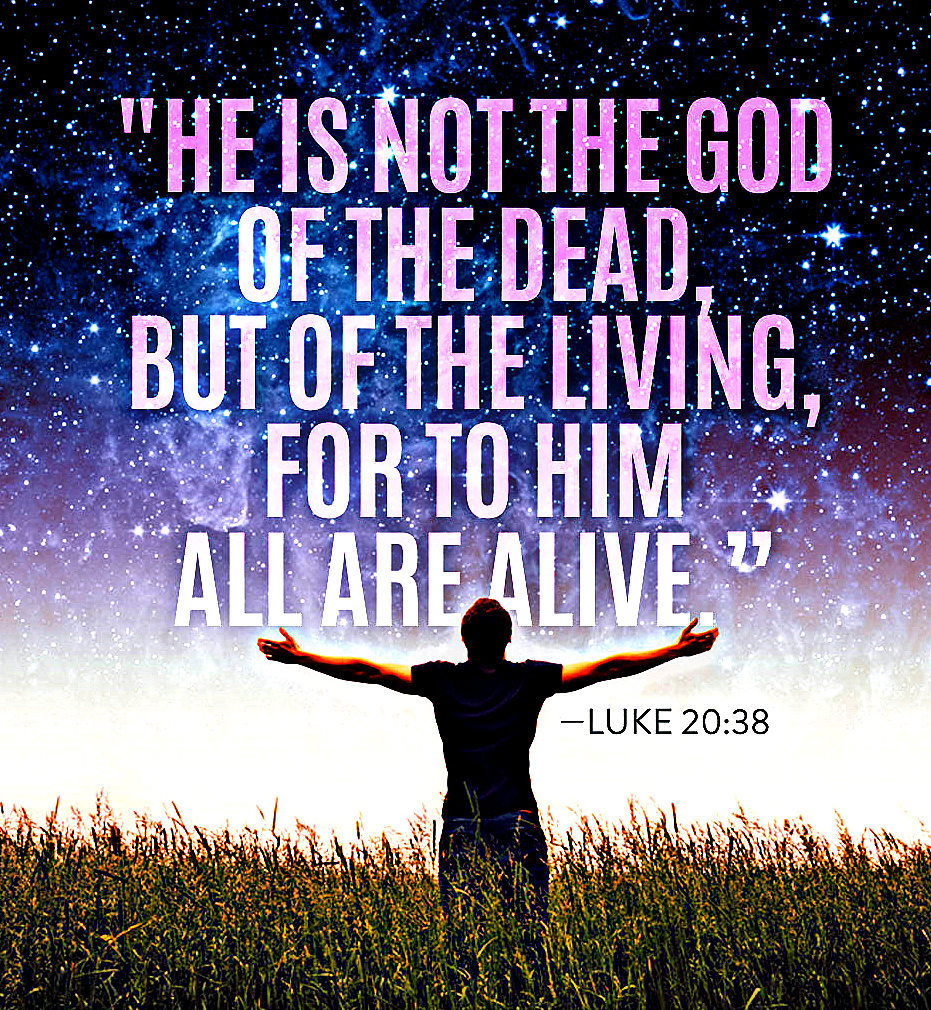
He is not the God of the dead, but of the living, for to him, all remain alive” Luke 20:34-38.
When you read about Old Testament judgments, remember this: God is holy, which means He is “separate from” us. And because he wants us to also be holy, he sometimes removes the most unholy from among us. But rather than see them die, God wants them to repent. He “takes no joy in the death of the wicked,” but when they refuse to repent and instead cling to wickedness, God will remove them, Ezekiel 33:11. He separates us from those who would destroy us and destroy our attempts to live holy lives. That separation often comes through death–but how serious is death when to God “all remain alive”? Death is not the same tragedy to God that it appears to us. Because “He is not the God of the dead, but of the living, for to him, all remain alive.”
Dear God, teach us to trust you. May we read the Bible with faith in you, never forgetting that your lovingkindness is everlasting. That you are compassionate. That you love us the way Jesus loved the children, the sick, the downtrodden. Fill us with faith and make us holy, and remind us that to you, “all remain alive.”
AΩ
* Another verse indicating that God does not enjoy judgment and would prefer NOT to exercise his wrath is Lamentations 3:33–“He does not enjoy bringing affliction or suffering on mankind.”
[1] The notion that all sins are equal is called “Sin-leveling” and it is unbiblical. Read more here: https://dadsdailydevotionals.com/2024/03/27/sin-leveling-luke-1013-14/
 Household Words: