Most people agree there was a man known as Jesus of Nazareth who was born in Bethlehem. But did you know the Bible foretold the Messiah would be born in the tiny town?
“But you, Bethlehem Ephrathah, who are small among the clans of Judah, out of you will come forth for Me One to be a ruler over Israel—one whose origins are of old, from the days of eternity” Micah 5:2.
After his visit from the magi, Herod wanted to kill the baby Jesus and it was this passage the priests quoted that led him to send soldiers to Bethlehem to kill all the little boys. Everyone understood that Bethlehem was the prophecied birthplace of the Messiah.
Did you know there are people today who, upon hearing this prophecy, suddenly turn into little Herods, trying to kill the baby Jesus all over again? Okay, perhaps ‘kill’ is too strong a term. They don’t want to kill him; they want to erase him. Thus, where they may once have admitted Jesus of Nazareth was a real person born in Bethlehem, suddenly they start saying he was never born in the first place.
They hear about Micah 5:2 and say things like, “How do you even know Jesus ever lived?”
We know because there is a historical record, including the writings of Josephus, a first-century Jew who was NOT a believer. Josephus reported on the imprisonment and death of John the Baptist and that Jesus was executed by Pontius Pilate, and that James was the brother of Jesus. No serious student of history questions whether Jesus actually lived.
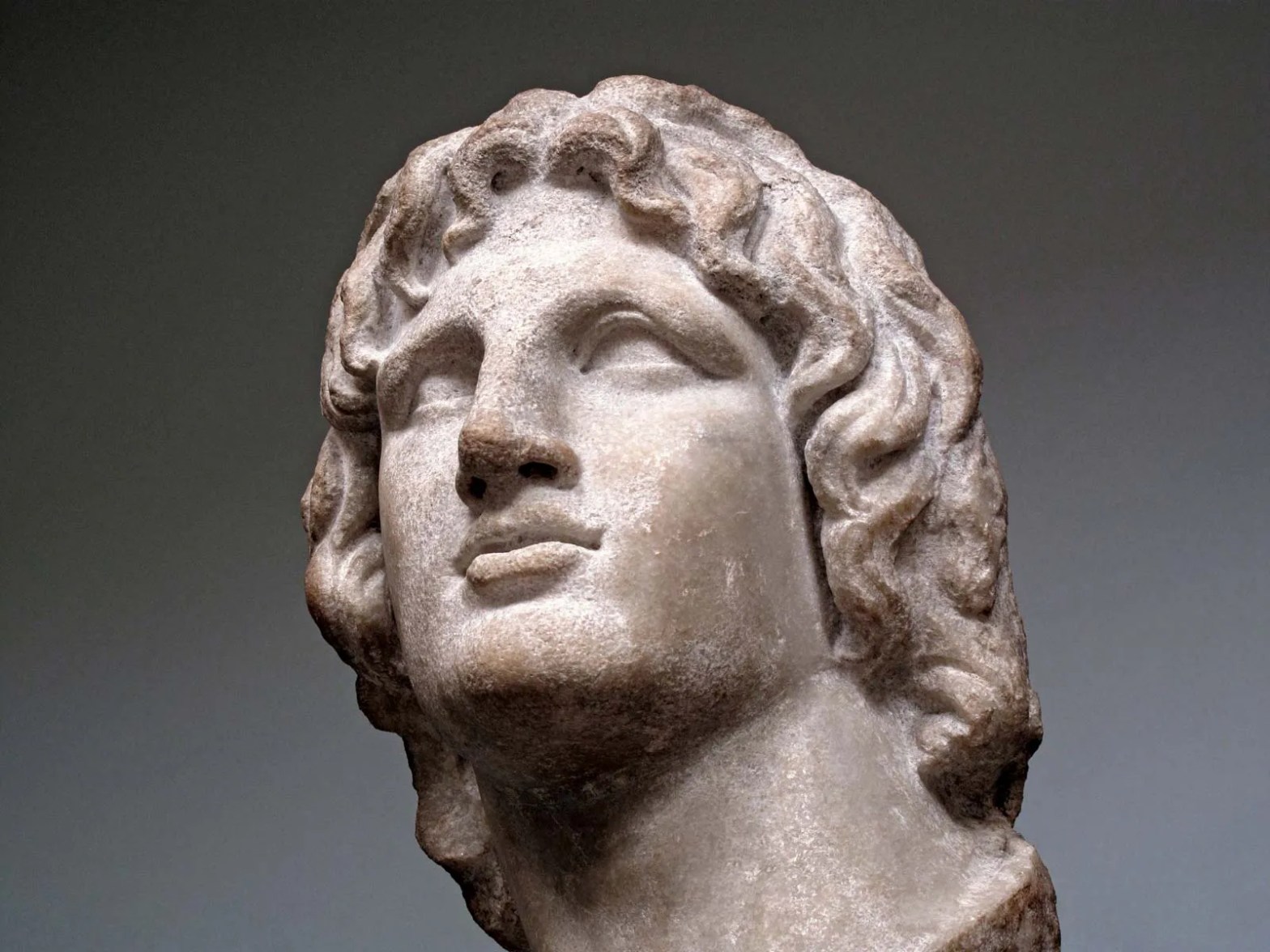
The Bible includes a fulfilled prophecy about another man who is almost as famous as Jesus. Maybe if we talked more about Daniel 8:21 we would find out how many people would start saying Alexander the Great never lived!
In Daniel’s vision, a huge ram with two horns is moving west, north, and south, and no one can stop him. Then a male goat comes from the west with a huge horn between his eyes. The goat attacked the ram in a rage and broke both the ram’s horns. Then the goat grew even stronger, but the horn between his eyes was broken, and four weaker horns replaced the single huge horn between the eyes.
The angel Gabriel came to Daniel and explained the vision.
Gabriel said the first ram with the two horns represented the kingdoms of the Medes and Persians. But those two empires and the rest of the world would soon be conquered by the charging goat from the west. What kingdom could be found to the west? Greece, the nation whose culture gave birth to what we know today as “the Western world.”
But Greece was nothing at the time of Daniel. No one could have imagined the tiny collection of loosely associated city-states (each city was its own nation) would ever grow powerful enough to conquer anyone.
But that is what Gabriel explained to Daniel:
“The rough goat is the king of Grecia, and the great horn that is between his eyes is the first king” Daniel 8:21.
We know from history that this first king of Greece, who would rapidly conquer the Medes and the Persians, was Alexander the Great. Alexander the Great then famously died young at 32 (the breaking of the horn between the eyes). Gabriel explained that after Alexander’s death, four weaker kings would rise to take his place:
“Now that [Alexander] being broken … four kingdoms shall stand up out of that nation, but not in his power” Daniel 8:22.
History records that after Alexander’s untimely death, his kingdom was plunged into forty years of civil war, eventually settling on a four-way split, being divided among Ptolemy I (Egypt and Palestine); Seleucus (Babylonia and Syria); Lysimachus (Asia Minor); and Antipater (Macedonia and Greece).
The facts of Alexander’s life are known, easily verified, and are predicted here with stunning accuracy, more than 200 years before Alexander was born.
Around the time Daniel was writing, God gave one of his contemporaries, the prophet Zechariah, a prophecy that also speaks of Alexander the Great, though somewhat indirectly. In Zechariah 9:8 God promises to protect Jerusalem from the “marauding forces” that he will use to punish Israel’s enemies. While this passage does not mention Alexander directly, history records that it was Alexander that God used to punish each of the enemy nations discussed in Zechariah, chapter nine: Hadrak, Hamath, Tyre, Sidon, Askelon, Gaza, Ekron, and the Philistines.
The historian Josephus records details that make this passage even more interesting.
It seems Alexander had every reason to conquer Jerusalem and wipe out the people of Israel. He had just conquered Tyre, only 40 miles away, and sent couriers to Jerusalem to request supplies. But Jerusalem refused his request.
(Who says no to Alexander the Great?)
Josephus writes that Alexander came to Jerusalem and was welcomed by the people. The priests did not brace for war because they took reassurance from the words of Zechariah that the city would be protected. Meanwhile, Alexander did not attack the city because he had had a dream in which he was welcomed to the city by the very high priest who did, in fact, come out to welcome him.
Once the conqueror arrived, Josephus writes that he was shown the words of Daniel and was “deeply impressed” and believed the words to have been written about him, because he was indeed the Greek king who had conquered the Persians.[1]
God, thank you that you are sovereign over history. You rule and reign over creation, and the events of the future are as clear to you as the events of the past. Help us understand and recall the numerous fulfilled prophecies in the Bible, and may we draw confidence in our faith from that knowledge. Give us opportunities to share these amazing facts with others.
AΩ
* The words of Daniel 8 and Zechariah 9 remind me of Ben Franklin’s words: “the Lord governs in the affairs of men.” How did Alexander conquer the world? By the power of God. God willed it and God placed power and authority over those nations into the hands of Alexander–to punish Israel’s enemies, as God has often did, raising kings and kingdoms to punish each other’s great sins, a pattern repeated throughout the Old Testament. Of course, Alexander had gifts and talents and great leadership ability and military strategy. But it is God who raised him up and made him great. God used first Greece and ultimately Rome to pave the way for the gospel. The Messiah came to a world with some degree of cultural unity (in the Hellenistic culture of Greece), that was unified by the huge government of the Roman Empire, with peace (the famous “pax romana”), a highway system, and many other things that contributed to the extraordinary growth of the early church.
[1] https://christiancourier.com/articles/alexander-the-great-an-amazing-example-of-prophecy-and-providence
 Household Words: