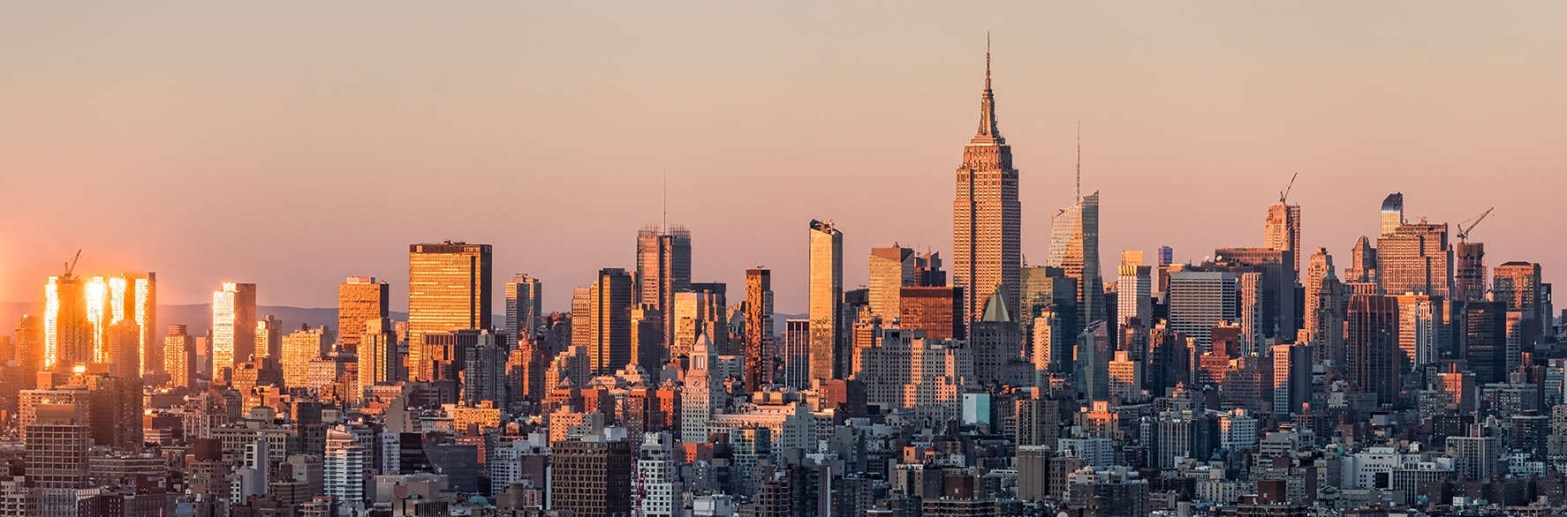
Image: New York City by Jan Christopher Becke.
An article I read begins with a great question:
“What do Ron Paul, Nancy Pelosi, and President Donald Trump have in common? They have all promised to ‘drain the swamp’ of Washington politics.”[1]
As the article goes on to point out, there never was a swamp on the Potomac–in spite of the persistence of the myth. What there was, was a grand city built out of nothing from the ground up. Today it is one of the most beautiful cities in the world. But my guess is no one was in a hurry to live there in the earliest days.
As a young college student, I once stumbled onto a set of books on city planning. My thought was Oh, ‘city planning’? That’s a thing?’ As an English major, I was aware of subjects like engineering and business, but who knew colleges were offering degrees in city planning? I started imagining the problems faced by city planners: how do you provide power, water, and essential services? What about sewers, flood control, and wildlife? How do you divide land between homes, businesses, and government?
I’ve since run across some real-life city planning problems:
How was Galveston to respond to the hurricane that wiped the city off the map in 1903? (The city built a concrete seawall and bounced back, though its port was moved to the safer waters of Houston.)
What was Detroit to do when factories closed down and workers moved away leaving miles of urban housing empty? Old neighborhoods became ghost towns, leaving the people in the suburbs to travel through miles of empty areas to reach their jobs in the city. (The city razed the empty houses, converting the land to parks and gardens.)
New York found itself filled with disease-ridden, crime-infested tenement housing which often saw ten or twelve families living in apartments designed for single families.[2] The city fought for the poor by passing laws requiring more fire escapes, more working outhouses/toilets, more space-per-person, more ventilation, more windows, periodic inspections, and in the end, a “Multiple Dwelling Law” that led to many tenements being torn down.
Finally, there is the fact that Houston (like so many of the world’s great cities) is sinking due to subsidence. My day job is part of the solution, a project to convert the city from over-use of groundwater to greater reliance on river water.
As I have noted often, the Bible is an intensely practical book.
(Unlike most religious texts, the Bible is not always poetry, and it is not always ‘spiritual.’ It is often quite practical.)
The Bible addresses many city planning topics.
For example, wild animals were once a serious consideration for city planners. God tells Israel He will drive the idol worshippers out of the Promised Land—but not all at once, because “the land would become desolate and the wild animals too numerous for you” Exodus 23:29.
Another practical text is Leviticus 14:33-53, in which God tells the people how to handle mold if they find it in their houses.
Sewage is addressed as God tells the people to relieve themselves outside of camp and use a shovel to bury it, Deuteronomy 23:12-14. Septic systems still work that way today.
Finally, in 2 Chronicles 32:30, King Hezekiah secured water for the city of Jerusalem by designing a 500-meter tunnel to springs outside the city. An army that might lay siege against the city would never know they had a water source behind the wall. To this day, engineers marvel at Hezekiah’s Tunnel.[3]
When the Israelites returned from the Babylonian captivity, they faced numerous city-planning problems.
They had to rebuild the walls around Jerusalem. They had to rebuild the temple. And they had to rebuild the city—its houses and its culture. There was no life in Jerusalem because there were so few people there.
“Now the leaders of the people settled in Jerusalem. The rest of the people cast lots to bring one out of every ten of them to live in Jerusalem, the holy city, while the remaining nine were to stay in their own towns. And the people blessed all the men that willingly offered to dwell in Jerusalem” Nehemiah 11:1-2.
Jerusalem is in the news every single day. It is the most hotly contested real estate on earth: everyone wants to own Jerusalem. It is not only the holy land for three of the world’s largest religions, but it is a beautiful, historic city.
But no one wanted to be bothered with Jerusalem after the Babylonian Captivity. Too many headaches. Much like the early days of the District of Columbia, only the leaders wanted to be in the capitol city. Creating Washington or reviving Jerusalem was going to be a lot of work. Would you be up for it? Notice who was.
“The leaders of the people settled in Jerusalem” v.1. Being a leader means doing hard things. The early days of a new project are hard, but that’s what leaders signed up for.
‘The people blessed those who willingly offered” v.2. I think the next best thing to a leader is a VOLUNTEER. And you know who appreciates volunteers? Those who did not volunteer. But so do the leaders. Leaders value volunteers. And–
If you hope to be a leader, volunteering is one way to get there.
“The rest of the people cast lots” v.1. This third group was drafted. They may not be appreciated the way volunteers are, but they will pitch in, do the work, and reap a deserved reward. Service is appreciated, whether you volunteered or not. We appreciate your service for the kingdom.
Dear God,
We are available. Show us when to step up. Show us when to volunteer. Use us as leaders and servants. May we serve You willingly, work hard, and treat people with kindness and compassion. Thank you for the practical words of the Bible. May we exercise wisdom as we study it and follow it.
AΩ.
[1] https://www.smithsonianmag.com/history/draining-swamp-guide-outsiders-and-career-politicians-180962448/
[2] I was reading yesterday about one tenement found with a wet cellar full of pigs, complete with a heavy load of unventilated manure. More commonly, landlords placed newly arrived immigrant families in the cellars or the tiny attics several flights up. Several of these tenements were found to contain nearly 100 children in only four apartments. In such close quarters, it is understandable that recurring epidemics spread like wildfire, wiping out large numbers living in poverty. HOW THE OTHER HALF LIVES: Studies Among the Tenements of New York, by Jacob Riis (1890).
 Household Words: