As I twisted free of my mother’s hand and ran under the trees, I saw the gate approaching and read the words. Could it really be true? A sign above a little square of grass deep in a Pine forest made me feel like part of some royal family. Who am I, the king of England? The sign above the gate in St. Helena Parish read, WALES CEMETERY. It was a wooden sign probably purchased at a county fair from a man with a router, spray paint, and a belt sander. But to me, it was as impressive as a jumbotron in Times Square. We were famous!
Jacob also had a family cemetery. When Sarah died, his grandfather Abraham bought the Cave of Machpelah in Hebron and buried her inside. Eventually, Abraham, Isaac, and Jacob, and their wives, Sarah, Rebekah, and Leah would all be buried there. When Jacob and his family (of seventy people!) moved to Egypt, he insisted his body be buried not in Egypt, but in his grandfather’s tomb back in Canaan, the Land of Promise.
“Bury me not, I pray thee, in Egypt. But I will lie with my fathers , and thou shalt carry me out of Egypt, and bury me in their burying place. And Joseph said, ‘I will do as thou hast said.’ And he said, ‘Swear to me.’ And he swore to him” Genesis 47:29-31.
A generation later, Joseph gave similar instructions. “God will surely visit you, and you shall carry my bones from hence” Genesis 50:25.
Eventually I discovered that family cemeteries were quite common. They are legal in all fifty states, and by some estimates, there are tens of thousands of private cemeteries across the country. I remember my father making several trips to the family cemetery to photograph tombstones and write notes that would help him piece together his family tree. No matter how the place may have impressed me as a child, the family cemetery was primarily a place to reflect on the past. Perhaps that explains why neither my father nor his father were buried there. Having lived most of their lives outside of St. Helena Parish, being buried there held no great appeal.
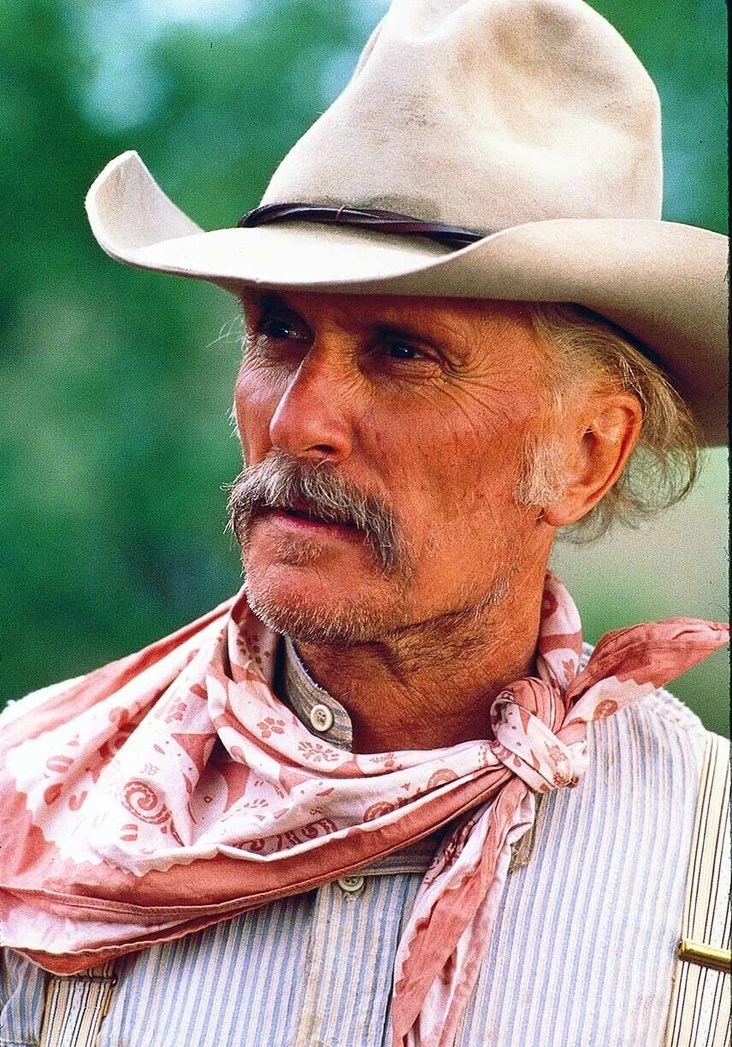
Such was not the case with Jacob and Joseph. Like Gus’s dying wish in LONESOME DOVE, Jacob and Joseph insisted on having their embalmed bodies transported from Egypt back to the land of Canaan–the Promised Land. But unlike Gus McCrae, who was looking back on happier times in a spot he called “Clara’s Orchard,” Jacob and Joseph were not looking back. The father and son were looking forward. They gave instructions concerning their bones because they had faith, because they were convinced that God would one day bring the family back from Egypt.
“By faith Joseph, when his end was near, spoke about the Exodus of the Israelites from Egypt and gave instructions concerning the burial of his bones” Hebrews 11:22.
Jacob also displayed faith. “Behold, I die. But God shall be with you, and bring you again unto the land of your fathers” Genesis 48:21.
Can you face death with faith? I won’t claim it is easy. But we know that people are happy and less anxious–healthier–when they have hope, when they can face the future with courage and faith. Jacob and Joseph recognized a key fact: this story is larger than my individual life. It will go on after me. Both men told their families to keep looking forward, to bury their bodies in the Promised Land, where God would one day bring His people home.
“She can laugh at the days to come” Proverbs 31:25.
The ‘Proverbs 31 Woman’ looks forward to the future with not only hope but laughter. Do you?
Dear God, remind us we are part of a much larger story. We have a role to play. Give us the faith to see beyond our own lives, to know that there are years, generations, perhaps centuries yet to come. May we have an eternal perspective, and use the years of our lives to bear fruit for Your kingdom, to store up treasure in heaven, and to encourage those who follow us to live lives of deep faith in a God who loves them so much.
AΩ.
 Household Words: