Today is September 10, 2025. It’s not quite September 11, but it almost feels like it. For me the day began with a host of personal and professional challenges. These problems felt serious and weighty, but about lunchtime they suddenly paled.
Charlie Kirk was shot.
First, I heard he was shot. Then I watched a grainy video from a distance. Then I saw a video of the shooting from about the third row. It could not have been more clear or more graphic. The video was appalling and grisly and horrible. I texted back four words: “that is not survivable.” He did not survive.
Charlie Kirk was something of a professional debater. Described by reporters as a “conservative firebrand,” “culture warrior, and podcaster,” the 31-year-old often spoke at colleges and did not avoid controversies. At the moment of the shooting he was actually talking about gun violence.
I cannot speculate on the shooter’s motives, but it seems we are living in a world in which we murder those with whom we disagree. We are living in a world at war.
Soon I turned to my Bible.
My daily reading brought me to Paul’s letters to the church at Thessalonica. But my writing schedule took me to Leviticus 15. What a contrast!
Writing 1400 Before Christ, Moses begins by discussing laws concerning various bodily discharges or “issues”:
“And when he that hath an issue is cleansed of his issue, then he shall number to himself seven days for his cleansing, and wash his clothes, and bathe his flesh in running water and shall be clean. And on the eighth day he shall take to him two turtledoves or two young pigeons and come before the Lord unto the door of the tabernacle … and the priest shall make an atonement for him before the Lord for his issue…” Leviticus 15:13-15.
On a day of murder—graphically videotaped and broadcast to the world—this sort of mundane reading of the Old Testament law seems incredibly, almost unbelievably dull. Who can calm their mind enough to concentrate on the arcane rules and rituals of ancient Israel? And why would you?
What relevance does Leviticus have to a world where a sniper can take a life from a thousand yards?
And what if you had lived 3400 years ago when Leviticus was hot off the press? Even if you were a citizen of ancient Israel, could you study the boring but highly technical content of this book during the many wars, sieges, captivities, and other political upheavals the nation endured? The lives of the ancient Hebrews were more war-torn and violent than anything the United States has seen in my lifetime.
Who has time to concentrate on Leviticus–then or now?
Reading Leviticus after watching a death broadcast almost in real time made me realize that some books are only intended for study and quiet reflection.
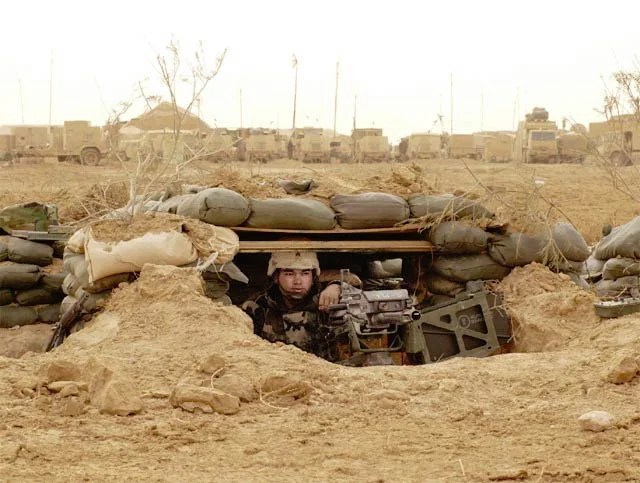
Remember the saying, “there are no atheists in foxholes?” Well, there are no soldiers reading Leviticus in foxholes either.
If bullets are whizzing over your head, you will want your Bible. You may crave your Bible like never before. But it will be Psalms you are after, or if not the Psalms, it will be the Gospels or Paul’s letters.
Paul’s epistles are written to Christians living in a world like ours, a world where they will be persecuted, where they may find themselves terrified, where they need God’s peace. Paul’s language is entirely different than that of Moses.
Paul provides the sort of hope and peace we need when we are overwhelmed by war, by murder, by death:
“Grace be to you, and peace from God our Father, and the Lord Jesus Christ” 1 Thessalonians 1:1.
(Now THAT is what we need on September 10 … and September 11th, 12th, and every day.)
“We sent Timothy … to comfort you concerning your faith, that no man should be moved by these afflictions (2:2-3). … For God has not appointed us to wrath but to obtain salvation by our Lord Jesus Christ (5:9).”
“We ourselves glory in you … that ye may be counted worthy of the kingdom of God for which also ye suffer” 2 Thessalonians 1:4-5.
“We pray always for you, … that the Name of the Lord Jesus Christ may be glorified in you (1:11-12). … Be not soon shaken in mind, or be troubled, neither by spirit, nor by word, nor by letter (2:2).”
“Finally, brethren, pray for us … that we may be delivered from unreasonable and wicked men, for all men have not faith. But the Lord is faithful, who shall establish you, and keep you from evil (3:1-3). … Now the Lord of peace Himself give you peace always by all means. The Lord be with you all … The grace of our Lord Jesus Christ be with you all. Amen” 2 Thessalonians 3:16-18.
There is nothing richer than the Bible, no better source for wisdom, history, human psychology, practical insights into leadership and governance, business and finance, and even things as elemental and raw as murder, war, survival, and victory.
There is a time for Leviticus. Absolutely. We must read and study the whole Bible.
But there are days for Psalms, days for hymns of worship and praise. Days when we need wisdom from those who have been persecuted, who have suffered for the cause of Christ.
There is no book like the Bible. May God fill our hearts with a deep love for His word.
AΩ.
 Household Words: