Just before the Israelites moved into the Promised Land, a group of tribal leaders came to Moses with a question. All had agreed that the daughters of Zelophehad would inherit the land that was to have been assigned to their father. But the leaders of their tribe feared that if those daughters should marry outside their tribe, then at death, the land they inherited would become the property of another tribe. Such a result would permanently reduce the land of the tribe of Manasseh. Moses took this complex problem to the Lord:
“Then at the Lord’s command Moses gave this order to the Israelites: ‘What the tribe of the descendants of Joseph is saying is right. This is what the Lord commands for Zelophehad’s daughters: They may marry anyone they please as long as they marry within their father’s tribal clan. No inheritance in Israel is to pass from one tribe to another, for every Israelite shall keep the tribal inheritance of their ancestors. Every daughter who inherits land in any Israelite tribe must marry someone in her father’s tribal clan, so that every Israelite will possess the inheritance of their ancestors. No inheritance may pass from one tribe to another, for each Israelite tribe is to keep the land it inherits.’ So Zelophehad’s daughters did as the Lord commanded Moses” Numbers 36:5-10.
When I was a child, I remember talking to my friends about the tribes and cultures around the world. We wondered why some people lived in huts, others in castles. Why do some people have cars, electricity, and antibiotics, and others run through the jungle barefoot and naked, killing each other with spears and blowguns? Are the people in the civilized cultures smarter? Or more talented? Or do they have a better religion? Or does their language give them a more adaptable way of thinking about the world? Racists and eugenicists argue it’s DNA—that some races are drawn toward imperialism, building things, and long life, and others are content to raise their children in trees, and die at 35. (I disagree: there is only one human race.)
Cynical thinkers often suggest the very notion of “civilization” is itself just makeup or whitewash, a costume we use to hide our savagery. Filmmaker Werner Herzog has said, “Civilization is like a thin layer of ice upon a deep ocean of chaos and darkness.”
Some are convinced our world of universities and hospitals, skyscrapers and voting machines, is no better than the darkest jungles of the Amazon. Some argue we are all evil monsters and our wealthy, complex society is merely a mask to hide our true selves. In fact, the popular notion of the “noble savage” takes the idea even further, arguing civilized societies are actually the evil ones*, and simple, aboriginal cultures are good and noble and deserve to be imitated.
But you will not convince me that every advance humanity has achieved is meaningless.
If society and its achievements were meaningless, then God would not have gone to such great lengths to show us how to live.
After all, the Bible is filled with advice on what to eat and not eat, how to handle wild animals, human waste, dead bodies, diseases of all kinds, and mold and mildew on the walls of your houses. God stepped into the life of Israel and taught them how to educate their children, how to run a government, how to punish crimes, how to adjudicate lawsuits, and so much more.
Civilization is what happens when people decide to stop killing each other so often and so quickly. Civilization is what happens when someone chooses patience.
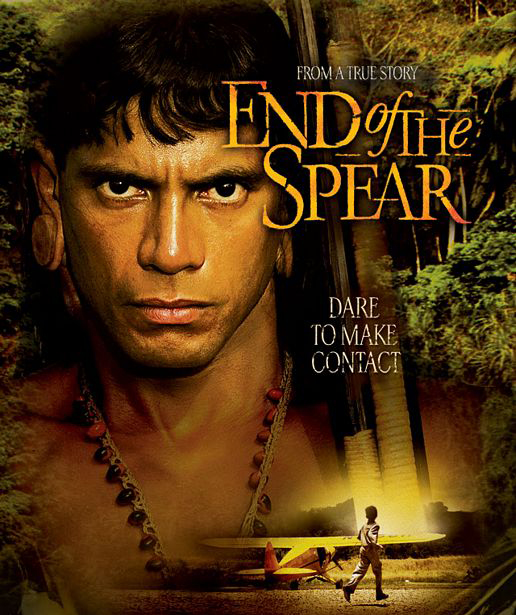
Consider the film “End of the Spear.” The movie tells the story of Ecuador’s Waodani people. These people living in the Amazon jungle are locked in a cycle of revenge killings. Every time one of the members of the tribe is killed, an avenger kills a member of the rival tribe. Soon, both tribes have killed so many that they face extinction. They are committing a sort of genocide, one enemy at a time. Until they stop. And they do stop. And that is the moment when a civilization is born.
By contrast, consider the story of Enrico Fermi. Fermi was the greatest physicist in Italy in 1938, and was, in fact, one of the greatest on earth. But when Mussolini’s Italy became an ally of Nazi Germany, Fermi was in trouble. His wife was Jewish and she and their children were suddenly at risk. So when the family traveled to Stockholm to accept the Nobel Prize in Physics, Fermi never returned, instead immigrating to the United States.
Once here, Fermi led the team that was the first to achieve a sustained nuclear chain reaction, proving the potential of nuclear physics. Then Fermi joined the Manhattan Project, building the bomb that–for all its controversy as a killing machine–stopped the killing of World War Two, because it stopped the war. Fermi then went on to enjoy a career in academia.
For purposes of this discussion, consider the position of Italy. The nation has done the unexpected: produced one of the greatest physicists in the world. But Italy loses him forever because the war drives him to the United States. In fact, the war caused Europe to lose thousands of scientists, scholars, musicians, artists, and more to the United States and other safer places. War will do that. Institutionalized killing will do that. When killing and death move in, civilization and life move out.
As I said, civilization happens when people slow down the killings. Personal convictions against killing are a good place to begin. But if a society can enact laws against killing, and create institutions that will punish killers, then the amount of killing will drop dramatically.
But what does killing have to do with civilization?
Civilization takes time! It takes so much time to create roads and bridges and castles and infrastructure. It takes thousands of people, a massive labor force to raise crops, to feed a nation, and to create homes and clothing and tools and labor-saving devices, and inventions of all kinds. As long as being killed remains a constant threat, everyone is forced to focus on killing enemies and protecting allies. You are so busy sharpening your sword, there is no time to repair your plow—much less, build a hospital or school or church or any of the hallmarks of civilization.
Perhaps taking one rare positive lesson from the relatively civilized nation of Egypt (the ruling civilization of the time), Ancient Israel was more civilized than bloodthirsty. Did they fight in wars? Yes. Did they kill? Of course. But the Hebrew nation was not as bloodthirsty as many. Speaking of revenge killings, God led the nation to establish sanctuary cities were even the designated avenger could not take a life. Israel outlawed murder and revenge killings and the number of killings slowed to a crawl, allowing time for God to begin giving the people laws and lessons.
Consider the problem of women inheriting land in the passage above from Numbers 36. In another nation, land moving permanently from one tribe to another would be stopped.
By killing.
But the leaders of the tribe of Manasseh took the problem to Moses and a solution was found in advance. That’s what civilizations do.
Civilization happens when a culture anticipates conflict and resolves it in advance**.
Civilization happens when a society creates laws that replace murder with due process, with some form of objective or blind justice that treats disparate parties fairly and resolves conflicts equitably.
But for such a system to work, the majority of the citizens must respect the process and be willing to abide by the court’s decisions. Creating a respected judicial system is no easy task! It is complicated. Civilized societies are highly specialized, highly complex. But such societies also created modern medicine, better fertilizers, and have increased global wealth (and global energy output) immeasurably.
Is this business about female heirs not marrying outside the tribe complex? Yes. Do we have more laws in the United States than we can count? Yes. But we also have an average life span that is longer than nearly every society in history. Do we require children to attend school for a dozen years or more? Yes. But we also live in one of the wealthiest nations that has ever existed.
There is a direct correlation between the reduction in killing and the opportunity for a society to build itself into a great civilization.
Do passages in the Bible ever strike you as overly complicated? If so, consider: to one degree or another, civilized societies have exchanged murder and war for complexity.
The Bible contains highly complex passages on Old Testament law, and on New Testament doctrine. But the specialized modern world we enjoy owes its existence to the law and legal system created in the Old Testament, and to convictions about grace and restoration taught in the New Testament. In some sense, our wealthy, healthy, educated, and peaceful lives owe everything to the sixth commandment:
“Thou shalt not kill” Exodus 20:13.
Dear God, may we always be grateful for the blessings we enjoy. Thank you for peace. Thank you for Your word that has taught people right and wrong for centuries. Thank you for our imperfect but well-intentioned governments that have built legal systems that allow us to pursue interesting, creative lives free from the constant threat of death. Help us every day to better understand the way your word has enriched our lives—even the most complicated passages of that word! May we love it more every day.
AΩ.
* Those who believe civilization itself is evil create for themselves an inverse sort of religion, one consisting primarily of sins: the rich are evil, corporations are evil, capitalism and free trade are evil, factories are evil, plastic is evil, petroleum is evil, carbon emissions are evil, paper is evil, big-pharma is evil, the medical industry is evil, medicine is evil, cars are evil, shipping is evil, trains are evil, trucking is evil (but Amazon is okay!), pre-packaged food is evil, fast food is evil, junk food is evil, eating meat is evil, farming is evil, governments are evil, automobiles are evil, and so on. These ideas have become so deeply rooted, it can be difficult to perceive that they do not add up and are, in fact, irrational.
** Some will argue that many civilizations have thrived while also killing millions. And it is easy to list examples. What empire has not been famous for its efficient killing? Some kill outsiders. Some kill their own people. Some kill both. But yes, the reign of death among otherwise successful, even world-dominating empires is unchallenged. But my point is not that civilizations do not kill, only that most advances in human life have happened during peacetime. When people are occupied with killing or escaping killing, they have no time for creativity, for invention, discovery, or raising the standard of living. Those things happen at other times and in other places. They happen before, after, and away from the killing. Again: civilization happens when people decide to stop killing each other so often and so quickly. Civilization is what happens when someone chooses patience.
 Household Words: