“Steven, you got a telephone call,” my dad announced one Saturday morning. He was oddly excited about it, eager to tell me the whole story. I had just crawled out of bed, a college student coming in the kitchen at 9 o’clock looking for some cereal.
“Why didn’t you wake me up?”
“Well, he called at 7 o’clock in the morning! Let me tell you what happened.”
“I’m all ears.”
“So the phone rings. I got up from reading the paper and answered and this man says, ‘Is Steven there?’ I said, ‘Well, he’s here, but he’s asleep!’ I had no idea who it was, mind you. But he sounded about my age. And then he laughs and he says, ‘Okay. He’s asleep, huh? Well, this is David Bush, I’m a friend of Ron Stadtlander. Of course, Steven knows me, you understand—’
“And then David says he was calling to ask you for Chris Wolff’s telephone number. So I dug around and found it for him. But then before we could get off the phone, he stops me. ‘Now, Mr. Wales, I want you to tell Steven, I have a Bible verse for him, okay?’ And oh, don’t you know I was curious to hear where this was going–?”
“Well, you and me both!” I laughed. My father continued:
“I told David ‘sure, lemme have it,’ and David announces–lemme see, I’ve got it written here–‘As a door turneth upon its hinges, so doth the sloth turn upon his bed,’ Proverbs 26:14.’ Oh, I laughed and laughed—!”
David Bush was one of the funniest people I had ever met. I smiled at my dad. “Yes, I do know! –He’s a morning person, a man after your own heart!”
“At any rate, I told him to wait while I grabbed a pen. ‘Said, ‘I gotta write this down.’ Oh, David and I both had a good laugh.”
I smiled. “Well, I’m glad you made a new friend. But why did he want Chris’s number?”
“Honestly, I have no idea.”
When the children of Israel left Egypt, things must have been so exciting. The people who had been enslaved for years had been freed in the most dramatic fashion. I wonder if the so-called “Children of Israel” suddenly thought they were grown—the “Adults of Israel”? Leaving Egypt must have felt like a graduation, as if the Hebrews were finally going to begin living their real lives. Then they crossed the Red Sea—another incredible miracle—and it was on!
And then it wasn’t. The exodus was like a firecracker that misfired. The fuse was lit, burned briefly, then went out.
Moses reported the history, measuring distance from Egypt to the Promised Land not in miles but in time:
“And the space in which we came from Kadesh-Barnea until we were come over the brook Zered, was thirty and eight years, until all the generation of the men of war were wasted out from among the host, as the Lord sware unto them” Deuteronomy 2:14-15.
What should have been a few months of adventure for the former slaves turned into four decades wandering in the wilderness.
Do you ever feel like you are wandering in the wilderness? Going around in circles? Are you a born-again believer, a follower of Christ, yet your life never seems to be going anywhere? Or worse, do you wonder whether the hand of the Lord is against all your hopes and dreams, the way He was against the generation that died in the wilderness?
It is possible to give your soul to Christ without giving Him all of you. Those of us who come to Christ as children or youth seem to struggle with this more than adult converts. But no matter the age, some of us land in a spot where we have made Jesus our Savior, but we remain our own lord. We persist in the pursuit of our own plans, our own dreams, our own interests, our own hobbies. We do not submit these details to God. Perhaps it does not even occur to us. (Does God care about my hopes? Dreams? Hobbies? YES!)
Discipleship is the way OUT of this wilderness. Becoming a disciple means engaging the practices that will help you grow in Christ. And as you grow in Christ, you will move out of the wilderness and into the Promised Land[1].
(Although, ironically, as you grow in Christ, you motivation will be less connected to some perceived ‘promised land’ where dreams come true, and more connected to the call to selfless sacrifice that discipleship entails.) God does not call us to lives of health and wealth, of prosperity and fun and fulfilment.
God sometimes blesses His children with experiences of peace, joy, hope, and happiness—and yes, for some even health and wealth, at least from time to time.
But that is not the point. The Christian life was never about my happiness. It was never about ME at all! As the martyr-pastor Dietrich Bonhoeffer famously put it, “When Jesus Christ calls a man, He bids him ‘Come and die.’” –Which brings me to the first and most critical point of discipleship:
1. GROVEL: GIVE-IN TO THE LORDSHIP OF CHRIST AND THE AUTHORITY OF HIS WORD.
If you are seated on the throne of your own life, then your Christianity lacks not only power, but purpose.
For the carnal, fleshly, selfish, lust-and-greed-driven Christian who is “in the wilderness,” this first step is where everything will begin to change: Give in. Or better, GROVEL. To grovel is to do more than bow or kneel. And yes, it is odd behavior in a nation without a king.
But if you could see your King, the Creator of the universe, I guarantee you would grovel.
Assuming the encounter was not immediately fatal (as scripture says it would be to a mere mortal, Exodus 33:20), you would immediately find yourself on the floor, willing yourself beneath the tile. Not because you doubt God’s love or His kindness. But because simply being in His presence would fill you with terror. We don’t like to use the term ‘grovel,’ but that is exactly what we would do if we could see more of God.
As I have written elsewhere, God’s longest-running miracle is His vigilant, daily effort to hide Himself. He knows He would overwhelm us utterly. So He veils Himself at all times. But when He reveals even His shadow, or His back as He did for Moses (Exodus 33:18-23), the result is a proper fear of God, a proper sense of humility, and a posture that grovels. (Ask God to give you a glimpse of His glory as He did for Moses. But be ready: it will change everything. )
If you love God and want to know Him and experience more of Him, practice the humility of a groveling posture, not only physically, but personally, emotionally, spiritually.
Grovel. Give in to His Lordship. Kneel before the Lordship of Christ. To put it in practical terms, think about how powerful God is and how insignificant you are. Talk to Him about that. Praise Him by talking to Him about His amazing qualities and attributes: I praise You God for Your power, Your wisdom, Your holiness, and Your mercy. I praise You because You answer prayer, and You provide for my every need.
Ask Him to help you understand His power and His lordship. Then talk to Jesus about you—about all your hopes, dreams, plans, and desires. Tell Him what you want for this day, for this month, for this life—and then SURRENDER. Let it all go. And tell Him that. Write it all down if you have to. Write down all your dreams and desires. And then write a prayer to Jesus in which you give all of that over to Him. Grovel, kneel, and give in to HIS lordship. Get off the throne of your life and ask Jesus to take His rightful place as LORD.
And while you’re at it, give in also to the Authority of God’s word. Talk to God about you again—about your beliefs. About your opinions. About your politics and policy, your views on culture, movies, art, books. Talk to God about your values, your ethics, your ideas. Talk to Him about everything you believe on every topic, even the most controversial. Tell God what you believe about the death penalty, abortion, gender, school choice, gun control, relationships, marriage, parenting, education, gambling, drinking, recreational drugs, you name it. Talk to God about every topic you can think of.
And then surrender those topics to Him. Tell God out loud that you want Him to be the Lord of your opinions and beliefs. Then ask Him to help you understand what His word has to say about those opinions and beliefs. And please note—I am not suggesting answers to any of those topics. I am merely encouraging you to ask God to reveal the answers through His word.
Give in to the AUTHORITY of God’s word. He gave us the Bible, an owner’s manual to help us navigate our days on earth. But we must use it. And we must read and interpret it correctly. Are there multiple interpretations? Absolutely. But we can pray! Ask the Holy Spirit to show you how to rightly interpret the word of God. And then submit. When God shows you what a passage of scripture really means, you must be willing to accept that. You must submit.
We must recognize that the Bible is the single authority on all subjects. We must submit—we must GIVE IN to the authority of God’s word.
2. READ THE WORD.
The second key to discipleship is simple: read the Bible. Set aside a time and place where you can read scripture every day. Do you have to begin with Genesis? No. Read whatever will hold your interest. Remember this: the books were not written in the order in which they are printed. There is no rule that says you must begin with Genesis and read all 66 books in order. Many who attempt that give up completely during the third book, Leviticus. There’s no need for that!
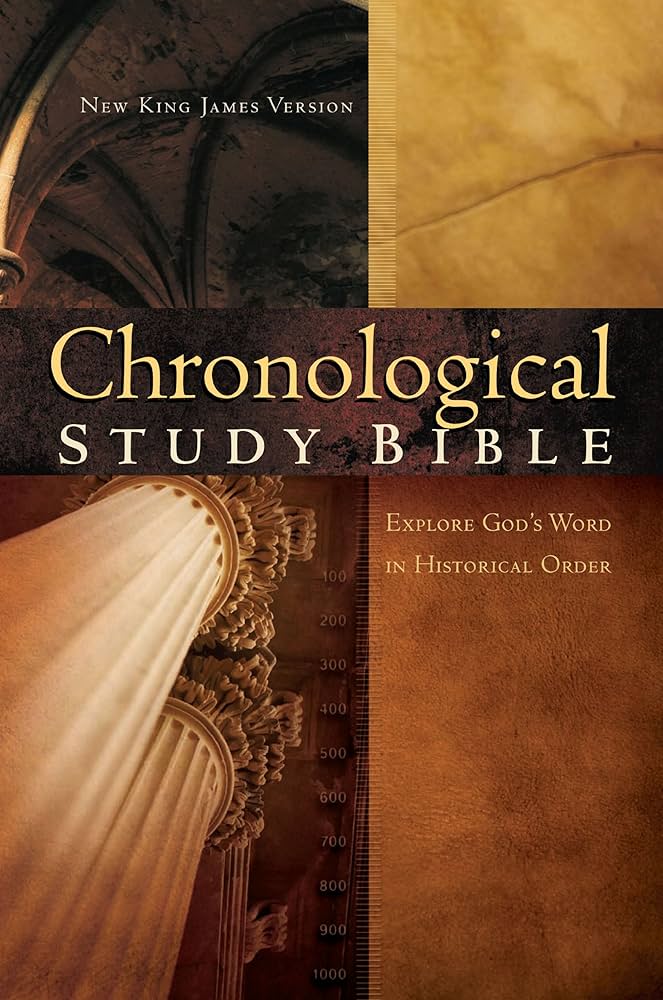
Skip Leviticus for now—not forever—but for now. You will get to it eventually! Right now, read whatever will hold your interest! Read Genesis, Exodus, 1 and 2 Samuel and 1 and 2 Kings, and then skip to the Gospels and the rest of the New Testament. Read things out of order. Better yet, choose my favorite method and read a chronological Bible, where editors have shuffled things around to put them in the order in which they happened. I love chronological Bibles!
The number-one rule for Bible reading is just keep reading!
Remember, this is a book with 2,000 pages. God has things to say to you on every page, but how will He speak to you if you get so discouraged by genealogies or laws or architectural plans that you quit. Skip the parts you find difficult or dull! Read the interesting parts! God will help you read the hard stuff later!
3. APPLY THE WORD.
The third key to discipleship and Christian growth (or simply “growth”) is to find ways to apply what you read to your daily life.
Ask God to help you, and He will. A study Bible is a big help because the editors line the margins with notes. Some of these explain difficult points of doctrine, but in my experience most of the notes in study Bibles explain how various passages apply to our lives.
Let’s consider an easy verse: “As a door turneth upon its hinges, so doth the sloth turn upon his bed,” Proverbs 26:14. David Dean’s favorite verse for people who sleep past 7 is easy to apply: get up! It means get up before the day is wasted. By implication, it suggests going to bed at a decent time. And you might argue it suggests working hard and using your time wisely. But getting up in the morning is enough. Application? Get up and get busy. Don’t oversleep.
4. MEMORIZE THE WORD.
When God uses a verse to really speak to you, memorize it! Think of it this way: if the God who formed the sun and moon and stars and planets took the time to speak to you, you should take the time to memorize what He says. Memorize a verse a week. Or memorize a verse a month. But make the effort.
Write a Bible verse down. Scribble it on the back of an envelope or on a Post-It note or an index card. Type it somewhere. Put it on your mirror or in your car. Then read it out loud. Say it over and over until you can say it without looking. Memorize it.
Do you think memorization is too hard? I bet you know hundreds of song lyrics. Actors, even those who did not enjoy school, find ways to memorize pages and pages of dialogue. How do they do it? They push themselves because it’s such an essential part of their craft. I once memorized 45 minutes of dialogue for a play and suddenly realized I had no excuse not to memorize scripture. Pastor Robert Jeffress shared the following illustration on his TV broadcast:
“But you say, ‘Pastor, I can’t memorize scripture. I can’t even remember where I put my car keys!’
“What if I told you that we are going to memorize Colossians chapter 3 this week, and next Sunday we are all going to stand and recite it … and to every one of you that memorizes the whole chapter I will give a check for $100,000.”
Long pause.
“How many of you would manage to memorize the whole chapter in a week? You see, it’s not a lack of ability but a lack of motivation. But don’t you see–? Memorizing scripture is like money … it is planting God’s treasure in your soul.”
There are useful verses that are very short: “Flee youthful lust” 2 Timothy 2:22. That’s only three words, yet it is powerful guidance for life. You can memorize three words.
And then when you face the temptation, train yourself to pull out the relevant verse and quote it over and over, being careful to do what it says. Flee lust. Or get out of bed earlier. Or “do not let the sun go down on your anger” Ephesians 4:26. There are many more. Discipline yourself to memorize verses. God will use them to push the wrong thoughts and habits out of your life and replace them with the right thoughts and habits.
5. PRAY THE WORD.
After you have memorized verses—and often WHILE you are memorizing verses—you can begin to use them in prayer. Talk to God about the verse: Dear God, I don’t want to roll back and forth on the bed like ‘a door turning on its hinges.’ Help me to get out of bed at an appropriate time. Help me not to be slothful. Teach me to go to bed earlier. Teach me to honor you with my sleep habits.
When you pray God’s word, you can be sure He will answer your prayers. Think of it like a lawyer citing caselaw to a judge. You are reminding God of His own word, and asking Him to make it real in your life. Of course, God will say yes to that prayer!
6. SHARE THE WORD.
Finally, share the word. How? When you are actively reading it, studying it, memorizing it, applying it, and praying it, God will give you opportunities to share it. You can bring Bible verses up in conversation, the way Mr. Dean did when he got my father on the phone. You can share verses while teaching people in a Bible study or in church. You can work with children and help them learn more about the Bible.
There are so many creative ways to share the word with others. But first, you need to begin to really, deeply learn the word. And that all begins when you grovel, i.e., when you deeply humble yourself before God, giving Him true lordship over every area of your life, and giving His word the final say, the ultimate authority over all your beliefs, opinions, and desires.
A final word. If this article seems to run a bit long, consider: this is one of the most personally important messages I might ever hope to teach. If I were asked to summarize my “life’s message” or to draft something to leave behind as a legacy, this brief article would be it. GRAMPS is an acronym for the six practices I believe to be the most essential in life[2]. And yes, should God make me a grandfather one day, ‘Gramps’ will be my choice for a grandpa name. It’s too perfect.
AΩ.
[1] Christians need to grow in Christ. The apostle Paul describes some who remain “baby Christians,” drinking only the milk of the Word, while others have moved on to solid food, I Corinthians 3:1-2.
[2] For several years I have been writing about “R.A.M.P.S.” But recently it occurred to me that those five points don’t amount to much until a would-be disciple has fully surrendered to the Lordship of Christ and the Authority of His word. As noted, ‘Grovel’ is a surprisingly harsh term, rather off-putting in an era that so deeply enshrines grace. But again—if you could see even a little bit of the Almighty, to grovel would feel like a step up. God is gracious and kind and loving, and children flocked to Jesus. But we should never forget the Holy and Eternal One before whom every knee shall bow.
 Household Words: