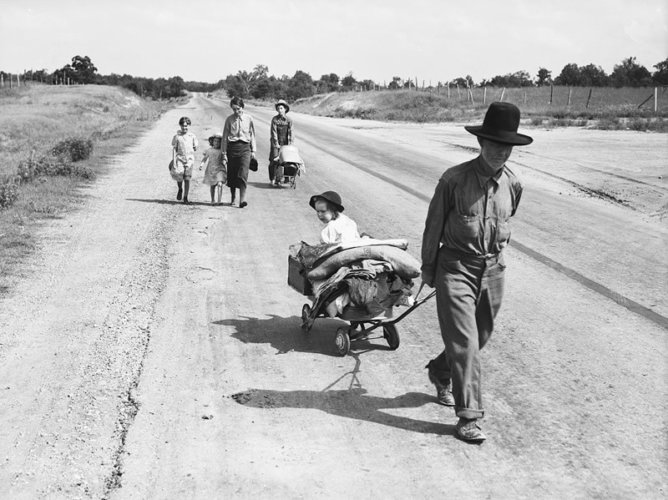
Image of a family of refugees seeking better times during the American Dust Bowl of the 1930s. Many traveled by car or bus, but this family was photographed walking with only an old wagon and a baby stroller. Yet, their plight is far better than some refugees—the nation was not at war, after all, and though the crops were failing, no one was being attacked.
Isaiah 15 is a short chapter, but not an easy one. How do you interpret a challenging bit of scripture? Look to the footnotes if your Bible has them. Study Bibles often do. Still lost? Consider a commentary. One of the most popular is the classic Matthew Henry Commentary, freely available online at the press of a button.
https://www.biblestudytools.com/commentaries/matthew-henry-complete/isaiah/15.html
Let’s begin with the text. The nine verses of Isaiah 15 foretell the destruction of Israel’s cousin—and on-again, off-again enemy—Moab.
“In the night [the city] Ar of Moab is laid waste … in the night Kir of Moab is laid waste … Moab shall howl over Nebo and over Medeba … Everyone shall howl, weeping … Even the armed soldier shall cry out. His life shall be grievous to him. My heart shall cry out for Moab, his fugitives shall flee to Zoar … The waters shall be desolate, the hay withered away, the grass fails, there is no green thing. The abundance the people have collected and that which they have laid up shall they carry away” Isaiah 15:1-7.
This chapter prophecies a war that will bring destruction to the cities and fields of Moab. The cities will be laid waste and the fields will dry up and blow away. The people who survive will be weeping, howling, as they wrap all their earthly goods up in a blanket or a basket and wander the roads as refugees. This is a sight we see today during times of war. I can remember photos of refugees flooding out of such places as Bosnia, Somalia, Honduras, Rwanda, and Sudan. You might remember scenes of refugees on the road in movies such as Casablanca, Hotel Rwanda, and the memorable ending of Fiddler on the Roof. But what can we learn from this picture of suffering in Isaiah 15?
The study Bible I’ve been reading lately offers a single note for Isaiah 15, providing some historical context about Moab—a people descended from Abraham’s nephew Lot. For more information, I looked up the Matthew Henry Commentary online. Writing some 300 years ago, the Presbyterian Minister Matthew Henry provides food for thought:
Henry speaks of the multitude weeping, wailing, howling. The people of Moab who are not dead are awash in grief over their lost loved ones and the destruction of their homes.
The suffering is so all-encompassing, Henry notes that the only relief they might find is that encapsulated in the Latin expression, SOCIOS HABUISSE DOLORIS. In English this phrase translates to “It is a comfort for the miserable to have had companions in pain.” In other words, MISERY LOVES COMPANY.
Yet this is almost a joke. Henry is saying these Moabites are suffering so horribly that the only comfort they have is the knowledge that they are not alone—and that is little comfort indeed.
None of the Moabites shall escape God’s judgment.
In fact, things are so bad, even the soldiers are discouraged.
“The armed soldier shall cry out. His life shall be grievous to him” Isaiah 15:4.
Matthew Henry comments that,
“Though they were bred soldiers, and were well armed, yet they shall cry out and shriek for fear, and every one of them shall have his life become grievous to him, though it is characteristic of a military life to delight in danger. See how easily God can dispirit the stoutest of men, and deprive a nation of benefit by those whom it most depended upon for strength and defense. The Moabites shall generally be so overwhelmed with grief that life itself shall be a burden to them. God can easily make weary of life those that are fondest of it.”
In the face of God’s judgment, even soldiers—those for whom the term ‘gung ho’ was coined—will lose their courage and eagerness for battle.
Henry then addresses the result of war: destruction, famine, and poverty:
“Famine is usually the sad effect of war. Look into the fields that were well watered, the fruitful meadows that yielded delightful prospects and more delightful products, and there all is eaten up, or carried off by the enemy’s foragers, and the remainder trodden to dirt by their horses. If an army encamp upon green fields, their greenness is soon gone. Look into the houses, and they are stripped too: The abundance of wealth that they had gotten with a great deal of art and industry, and that which they had laid up with a great deal of care and confidence, shall they carry away to the brook of the willows.”
God’s judgment will bring destruction, famine, and poverty.

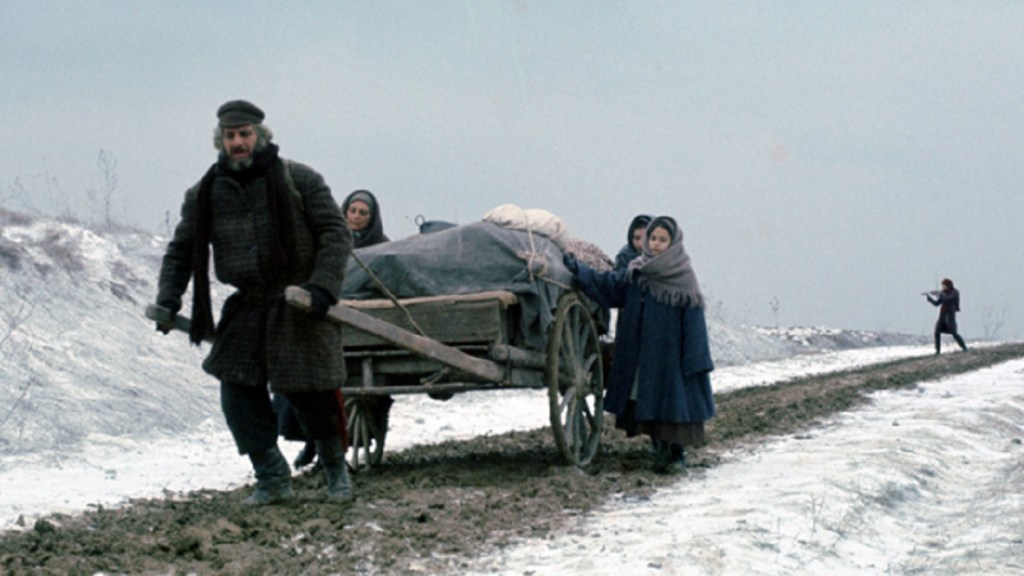
(Still from the 2023 film Io Capitano, telling the true story of refugees traveling from Senegal to Italy across the Sahara Desert.)
Finally, there is a word of hope. The passage describes refugees on the run, fugitives carrying all their possessions with them. But some of them will retreat to the city of Zoar, like their ancestor Lot did so long ago.* Lot fled the destruction of Sodom and Gomorrah and found himself in Zoar. Matthew Henry writes,
“The fugitives … shall carry the cry to Zoar, the city to which their ancestor Lot fled for shelter from Sodom’s flames and which was spared for his sake.”
Even in judgment, God often provides a place of refuge, a city of Zoar.
In sum, Isaiah 15 teaches these lessons:
- None of the Moabites shall escape God’s judgment.
- In the face of God’s judgment, even soldiers—those for whom the term ‘gung ho’ was coined—will lose their courage and eagerness for battle.
- God’s judgment will bring destruction, famine, and poverty.
- Even in judgment, God often provides a place of refuge, a city of Zoar.
As I said, much of the above was gleaned from the Matthew Henry Commentary, a six-volume commentary on the entire Bible. A Wikipedia entry describes the classic commentary this way: “Famous evangelical Protestant preachers used and heartily commended the work, such as John Wesley, George Whitefield and Charles Spurgeon, with Whitefield reading it through four times – the last time on his knees. Spurgeon stated, ‘Every minister ought to read it entirely and carefully through once at least.’”
Dear God, teach us to read well Your amazing words. Guide us to the aids we need, whether footnotes in a Study Bible, or commentaries like the extraordinary work of Matthew Henry. May we grow to know Your word better every day.
AΩ.
- I have long known of a church named Zoar: Zoar Baptist Church in Central City (Baton Rouge), Louisiana. It was only while drafting these words that my curiosity finally got the best of me, and I texted my cousin. She informed me that yes, the church was named after the refuge city to which Lot fled when he ran from the destruction of Sodom and Gomorrah.
 Household Words: