The Moment in the Cave.

This morning as I considered spraying washer fluid on my windshield to “encourage” a tailgater to back off, it came to me:

HERE’S THE GREATEST RULE IN ETHICS:

Do unto others as you would have them do unto you” Luke 6:31.

Are we following that standard?  Some politicians follow a different ethic: “Attack your enemies before they attack you.”  Some go further: “Attack your allies before they have a chance to become enemies.” 

What would King David do?

Saul wanted to kill David for years.  He threw spears at him.  He chased him all over Israel. He killed 85 priests AND the entire city of Nob (men, women, children, and animals) to punish them for harboring David.  Then in a lonely mountain cave, God delivered Saul into David’s hands.  While David and his men were hiding deep in the cave, Saul entered to relieve himself.

Everyone was whispering:  “Now’s your chance, David!  Kill him now!  It must be God’s will!  That’s why God brought him here!”

David stealthily cut the edge off Saul’s robe, but refused to touch the evil king.  After Saul left the cave, David came out, bowed to the ground, and showed Saul the fabric:

My lord the king!… The Lord handed you over to me today in the cave … but I took pity on you and said, ‘I won’t lift my hand against my lord, because he is the Lord’s anointed.’ Look and see that … I haven’t sinned against you even though you are hunting me down to take my life.  May the Lord take vengeance on you for me, but my hand will never be against you” 1 Samuel 24:8-12.

David followed the Golden Rule.  David respected God’s anointing on Saul—and He trusted God’s timing.  He understood “‘Vengeance is mine’ sayeth the Lord” (Deuteronomy 32:35 and Romans 12:19).

What about you? When God brings you your moment in the cave, what will you do? Can you leave vengeance in God’s hands? Can you trust Him to fight your battles?

ΑΩ

When Friends Become Enemies.

Have you watched relationships change? It’s amazing when an enemy becomes a friend.  That is the greatest feeling, a debt converted to an asset.  I’ve seen a few of my “enemies” become friends over the years, and it is so satisfying.

But when it goes the other way, it is devastating.  When people you love stop loving you for no reason—THAT HURTS.  It hurts so much.

When Saul met David the “courageous warrior, eloquent and handsome… SAUL ADMIRED HIM GREATLY, and David became his armor bearer” 1 Samuel 16:18,21.  When David killed Goliath, “Saul kept David with him from that day on” 1 Sam. 18:2.  David began leading troops and “was successful in everything Saul sent him to do” v.5. 

But Saul began to feel threatened: “Saul was afraid of David because THE LORD WAS WITH DAVID, BUT HAD LEFT SAUL….  David continued to be successful because the Lord was with him.  When Saul observed that David was very successful, HE DREADED HIM” v.12,14-15. Eventually, Saul convinced David to become his son-in-law.  So they became family—LITERALLY.  And Saul asked both his daughter Michal, and his son, Jonathan, to betray David, but the two loved him, leaving Saul to spend the rest of his life on a quest to murder David.

David ached over his broken relationship with the king. No one was ever a more loyal servant than David was to Saul—even after Saul tried to kill him. David was absolutely loyal and honorable, yet Saul always believed the worst about him.  So what did David do? He took it to God. Psalms 69 and 109 contain great words about the hurt Saul caused David (and that Judas would later cause Jesus).

With words of hatred they surround me. They attack me without cause. In return for friendship, they accuse me, but I am a man of prayer” Psalm 109:3-4.

Jesus has been there.  He was betrayed by a close friend. He knows how it feels. Read Psalm 69 and 109 and let him share your hurt.

ΑΩ

Homosociality. Proverbs 18:24.

Homo what? There’s an odd term. Homosociality means “same-sex relationships that are not of a romantic or sexual nature, such as friendship, mentorship, or others.” Think about your best friends, teachers, and coaches—some of these are powerful, intense relationships with members of the same sex. But they are not sexual, merely “social.” Thus, “homosocial.”

The Bible includes several intense “homosocial” relationships: Jesus and His disciples, for example. These 13 men traveled the road together for three years, in the sun, wind, and storms, plodding along in the sand, sailing on the sea, eating over camp fires, sleeping under the stars, and talking about everything under the sun. Jesus poured His life into these men. He shared secrets with them. He loved them.

Another intense homosocial relationship exists between David and Jonathan. These two men loved each other and were not afraid to say so.

The soul of Jonathan was knit to the soul of David, and Jonathan loved him as himself…. Jonathan made a covenant with David, and stripped himself of his robe and gave it to David, with his armor, including his sword and his bow and belt.” 1 Samuel 18:1-5.

Later, the two men realized they had to part because Jonathan’s father Saul was trying to kill David. “David and Jonathan kissed each other and wept, though David wept more” I Sam. 20:41. They never saw each other again. When Jonathan was killed, David lamented:

How the mighty have fallen! I grieve for you, Jonathan, my brother. You were such a friend to me. Your love for me was greater than the love of women.” 2 Sam. 1:26. (These are strong words, but it is clear that even with—or because of—his 700 wives, David does not seem to have had any good relationships with women.)

The Bible supports the truth—you can have strong, intense relationships with friends of the same sex. Pray—ask God for wisdom about those relationships.

A man of too many friends comes to ruin, but there are some friends who stick closer than a brother.” Proverbs 18:24.

ΑΩ

David’s Secret.

How did David have the courage to face Goliath? David was POSITIVE he would kill this man who was ten feet tall. David was so confident, he persuaded Saul to risk everything on David—not a soldier, but an untested boy. How was he so sure?

David had previously killed lions and bears when they snatched lambs. Who does that for sheep? And to grab their fur and kill them without bullets? What was David’s secret?

I don’t think even David knew at the time. But the text says it over and over: “The Lord was with David” (see 1 Samuel 16:13, 18; 18:12,14,28.) David was anointed by Samuel. “So Samuel took the horn of oil, anointed him… and the Spirit of God took control of David from that day” I Sam. 16:13.

That day God changed his life. God CALLED him to these battles. David had the confidence that ONLY comes from hearing the voice of God. When God calls you, He gives you ‘un-doubtable’ confidence. That is why this young man with no sword, shield, or armor, could run to the battle and attack Goliath. And look at this bold speech!

You come to me with a sword, a spear, and a javelin. But I come to you in the Name of the Lord of Hosts, the God of the armies of Israel, whom you have taunted. This day the Lord will deliver you up into my hands, and I will strike you down and remove your head from you. And I will give the dead bodies of the army of the Philistines this day to the birds of the sky and the wild beasts of the earth, that all the earth may know that there is a God in Israel.” 1 Samuel 17:45-47.

Do you ever lack confidence? Beg God to lead you! Once God speaks and calls you to His plan, you may never doubt again! But He won’t speak until He knows you are willing to obey. Pray. Lay all your options down before Him. He will show you which to choose.

ΑΩ

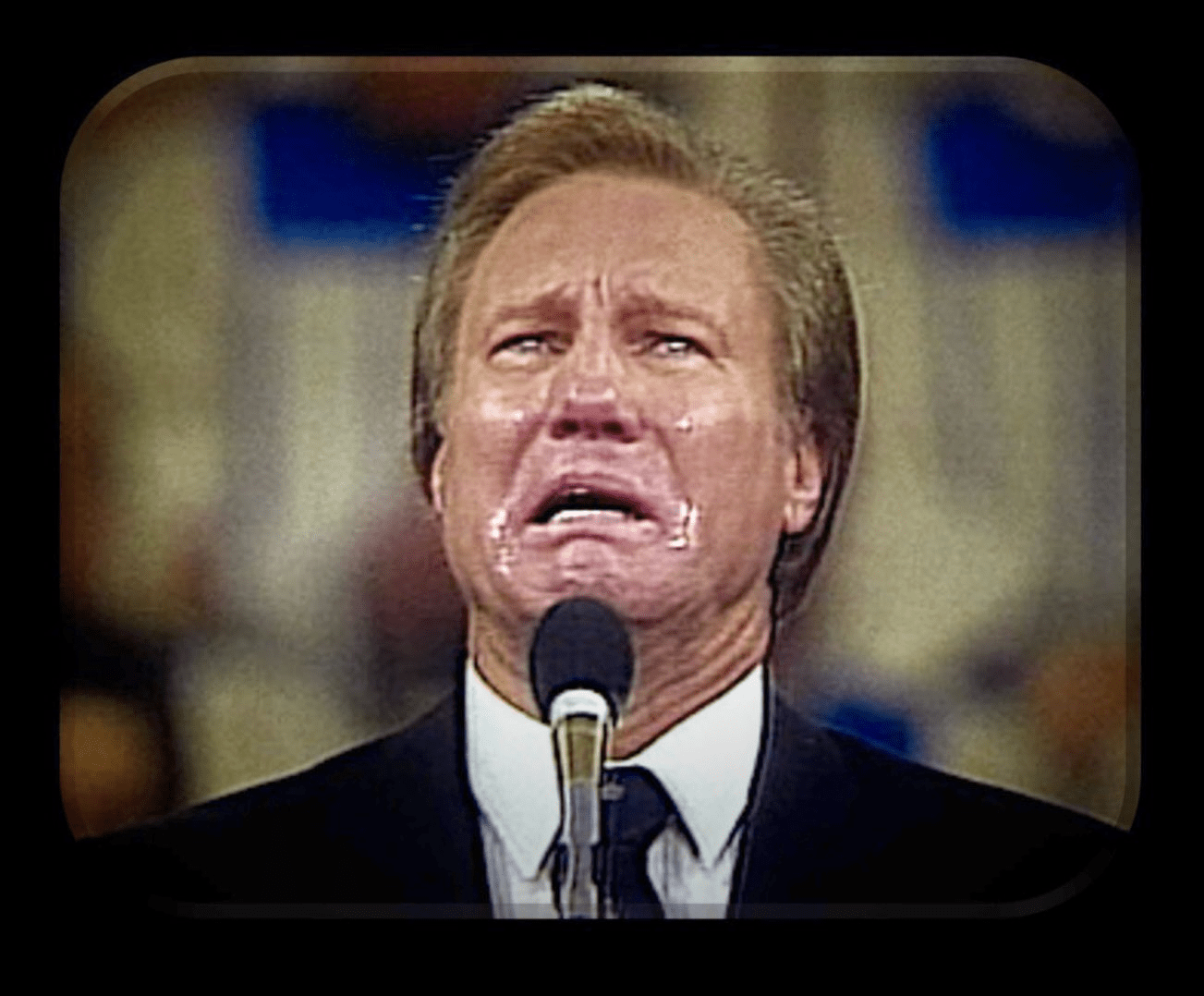
Is it Better to Release Emotions or Hold Them in?

Is it better to release emotions or hold them in? That depends on the context. 

There is … a time to weep and a time to laugh, a time to mourn and a time to dance” Ecclesiastes 3:4. 

A memorial service is a good time for weeping, but if the county judge were to weep during a press conference before the hurricane comes ashore, it might convey the wrong message. 

Though both sexes do it, men seem to have a special ability to compartmentalize.  You pack your trauma away in a mental cabinet somewhere, close the door, and return to the task at hand.  There is value in that: when your buddy is gunned down next to you on the battlefield, you ignore the emotions, close the door on the problem, and keep fighting.  It’s a critical survival mechanism.  But it is unhealthy.  Emotions packed away tend to fester.  This is an area where American men fail: we become so good at hiding from bad emotions, we lose touch with ALL emotions.  Cutting yourself off from grief can also cut you off from joy, hope, and love, until all you feel is the hopeless ache of depression.

It does not have to be this way.  King David was a man’s man, right?  He killed Goliath, women sang songs about him, and he led Israel’s armies for forty years.  He killed so many men that God called him a man of bloodshed.  David’s masculinity was never in doubt.

But David was also a worshipper, a musician, and a poet.  He was tender, vulnerable, and real.  David knew that he could be a great champion for God AND a great lover of God’s people.  When Jonathan and David had to part ways, “he and Jonathan kissed each other and wept with each other, though David wept more” 1 Samuel 20:41. 

David expressed emotions.  He wrote about them, sang about them, and shed tears.  This hero of heroes never left emotions packed away.  In the right time and place, David released his emotions.

God, give us the courage to express our emotions appropriately.

ΑΩ

Your Young Years Are Critical.

The future kings Saul and David were so different.  Saul hid from the spotlight, complaining that he was from a clan of nobodies.  David welcomed the anointing and was fearless in the face of a ten-foot-tall Philistine with a spear so heavy normal men called it a beam.

Samuel anointed each man.  The Spirit of God “took control” of each man (1 Samuel 11:6 and 16:13) and God used each man.  But David was much more obedient and God blessed David far more than He did Saul.  Why?  What was different about the two?

I believe the difference was their early years.  We know little about Saul’s early days.  But David had been walking with God for years and had seen God do amazing things:

Your servant has been tending his father’s sheep. Whenever a lion or a bear came and carried off a lamb from the flock, I went after it, struck it down, and rescued the lamb from its mouth. If it reared up to strike me, I would grab it by its fur, strike it down, and kill it.  Your servant has killed lions and bears. This uncircumcised Philistine will be like one of them, for he has defied the armies of the living God….  The Lord Who rescued me from the paw of the lion and the paw of the bear will rescue me from the hand of this Philistine!” 1 Samuel 17:34-37.

Maybe Saul was like so many young people who think they can goof off for years and get serious about their faith after they grow up.  That is utterly stupid.  By God’s grace, David was not one of these foolish youth.  David walked with God as a child alone in the wilderness protecting a flock of sheep.  And because he was faithful, God demonstrated His power in David’s life over and over.  Consequently, David entered adulthood with a powerful faith resting on the foundation of a youth spent walking with God.

David entered adulthood with a powerful faith resting on the foundation of a youth spent walking with God.

“Remember your Creator in the days of your youth” Ecclesiastes 12:1.

Don’t waste another day NOT walking with God.

ΑΩ

Beauty.

Actor Sidney Poitier said something that amazed me. He grew up with no running water, no electricity—and no mirrors.

I didn’t know what a mirror was until I was ten years old.  I never thought about what I looked like.”

CAN YOU IMAGINE!?  Poitier grew up surrounded by people who ignored appearances.  Contrast that with today’s visually-obsessed children, drowning in a world of online images where vicious people judge looks as hatefully as possible.  I wonder who had the happier childhood?

Of course, Americans have long been obsessed with appearances.  We are so shallow looks affect not only romance, but friendships, hiring decisions, and more. 

But what does God say?

Proverbs 31:30 says, “BEAUTY IS VAIN [empty], but a woman who fears the Lord, she shall be praised.”  Beauty is meaningless, yet how often do we let someone’s beauty get us into trouble?  The Bible provides good examples of two handsome men who were unreliable.  Saul was “tall, dark, and handsome,” but repeatedly failed to obey the Lord. Absalom was “the most handsome man in Israel,” and died leading a rebellion against his father, King David.  Beauty is vain.

Peter says find your beauty not in hair, jewelry, or clothes, but on the inside. Cultivate “the unfading beauty of a gentle spirit, which is of great worth in God’s sight” 1 Peter 3:3-4.  There’s nothing wrong with looking your best, but your priority should be INNER BEAUTY, a gentle spirit.  After all, you were CREATED IN THE IMAGE OF GOD.  There is nothing lacking in the beauty He gave you. So take baths. Wear clean clothes that will not fall apart.  But focus on the heart.

And FOCUS ON THE HEARTS OF OTHERS.  God told Samuel to look at the heart.  “Do not look at his appearance or his height, for I have rejected him. For God does not see as man sees.  MAN LOOKS ON THE OUTWARD APPEARANCE, BUT THE LORD LOOKS ON THE HEART” 1 Samuel 16:7. 

“God does not see as man sees.  MAN LOOKS ON THE OUTWARD APPEARANCE, BUT THE LORD LOOKS ON THE HEART.”

God, train us to ignore appearances and look deeply at the heart.

ΑΩ

What Makes a Great Preacher? Jonah and 1 Samuel 16:13.

What is the secret to preaching?  Is it being funny? Or telling a good story? Or having four points that begin with the letter “P”?  How about rightly interpreting a passage of scripture?  That is important, but there is more: preachers should explain scripture—AND it should be the passage God placed on their hearts for that day and time.

—Yet even that may be an incomplete picture of great preaching.

Do you remember Jonah? He preached to the idol-worshipping Ninevites and a city of 120,000 repented of their sins and fasted and prayed and turned to Yahweh, the One true God. And remember, Jonah did not WANT to preach to Nineveh.  He hated those people and hoped God would destroy them. He ran from God’s calling because he WANTED God to destroy Nineveh. 

Consequently, his preaching must have been lackluster.  No jokes, no stories. No illustrations. No parables. No charm. No charisma.  The man probably just rattled off the words “in forty days Nineveh will be destroyed,” hoping no one was listening.  But they listened and the entire city repented, put sackcloth on man—AND beast—and fasted, both man and beast taking neither food NOR WATER, and God changed His mind and the city was saved. –And Jonah was furious!  He said to God, “Please take my life!  I would rather die than live!”

In other words, Jonah wanted to preach in such a way that he would be ignored. He wanted to be ineffective. He wanted to preach a terrible sermon to which no one would respond.  But He could not.  Do you know why? Because Jonah’s preaching was ANOINTED BY GOD.

You can’t preach badly with God’s anointing—and you can’t preach well without it.  

Pray God will anoint your words.

Then Samuel took the horn of oil and anointed David in the midst of his brothers. AND THE SPIRIT OF THE LORD RUSHED UPON DAVID FROM THAT DAY FORWARD” 1 Samuel 16:13.

God, may we obey You and follow You and may our words be anointed by Your Holy Spirit.

ΑΩ

Human Resources and the Heart.

Have you ever hired anyone? Ever chosen a person to fill a spot on a team or an officer in a club? Even choosing a roommate can be tricky.

When Saul disobeyed God, God rejected him as king and chose someone else. God told Samuel to go to Bethlehem and meet the sons of Jesse. So Jesse trotted out the 7-man lineup, beginning with the oldest. Samuel saw this impressive man and said to himself, “Certainly the Lord’s anointed is standing here before me.” But the Lord said to Samuel:

Do not look at his appearance or his stature, for I have rejected him. Man does not see as God sees. For man looks on the outward appearance, but the Lord looks on the heart” 1 Samuel 16:7.

So one by one, Jesse brought them out in order, sons two through seven. And all of them were impressive, and all of them were rejected by God. And then there were none left. So Samuel turned to Jesse: “Are these all your sons?” And Jesse said, “There is still the youngest, but he is out tending sheep.” So Samuel said “Send for him. We will not sit down until he arrives.”

Finally, David (number eight) showed up, with “beautiful eyes and a healthy, handsome appearance. Then the Lord said, ‘Anoint him, for he is the one.’” I Sam. 16:12.

We need to look at people the way God does. We need to judge them by their hearts, not their appearance. Ask God to help you see their hearts, their gifts, their talents. Ask Him to help you see beyond the physical. The heart is SO MUCH more important. Sometimes looks play an early role in friendship. But it is the heart with which you fall in love. Beg God to help you discern people’s hearts. And notice—David was good looking too, just like his older brothers. But the point of the story is, the looks are a bonus. God is interested in the HEART—and we should be too.

ΑΩ

Obedience > Worship.

When our faith is young, we look for ways to impress God.  We negotiate—we try to make deals, to bargain with God: “Lord, if you get me out of this, I will put such and such in the offering plate.”  Or, “God, if you will bless me with this, I will stop doing so-and-so.”

But God is not interested in deals—nor is He impressed by sacrifices.  Samuel told King Saul to destroy the Amalekites as punishment for what they did to Israel, to “completely destroy everything. Put to death both man and woman, child and infant, ox and sheep, camel and donkey.” That may sound harsh, but God cannot tolerate evil—and He knows the seemingly innocent children of these pagans will become another generation of pagan destroyers.  So God requires their annihilation in order to protect His people.  But Saul did not obey.

“Saul defeated the Amalekites…. But Saul spared King Agag and the best of the sheep, the oxen, the more valuable animals, the lambs, and everything that was good, and was unwilling to destroy them completely” 1 Samuel 15:7,9.  When Samuel returned he was angry.  “What is this bleating of sheep in my ears and this bellowing of oxen that I hear?”v.14.  Saul said, “we spared the best of the sheep and oxen to sacrifice to the Lord your God”v.15.  Samuel rebukes the king: “Why didn’t you completely obey the Lord?,” and Saul ARGUES about it:  “I DID obey the Lord… but the people took some of the spoils… to sacrifice to the Lord”v.20-21. Then Samuel pronounces a great truth:

Behold, to obey is BETTER than sacrifice, and to HEED than the fat of rams. For rebellion is as the sin of witchcraft, and stubbornness is as iniquity and idolatry

1 Samuel 15:22-23.

Stop trying to make deals with God. Stop trying to impress Him with some sacrifice.  Just OBEY. Memorize this verse—that rebellion is as bad as witchcraft—and take it to heart.

God, give us consistent, obedient hearts.

ΑΩ