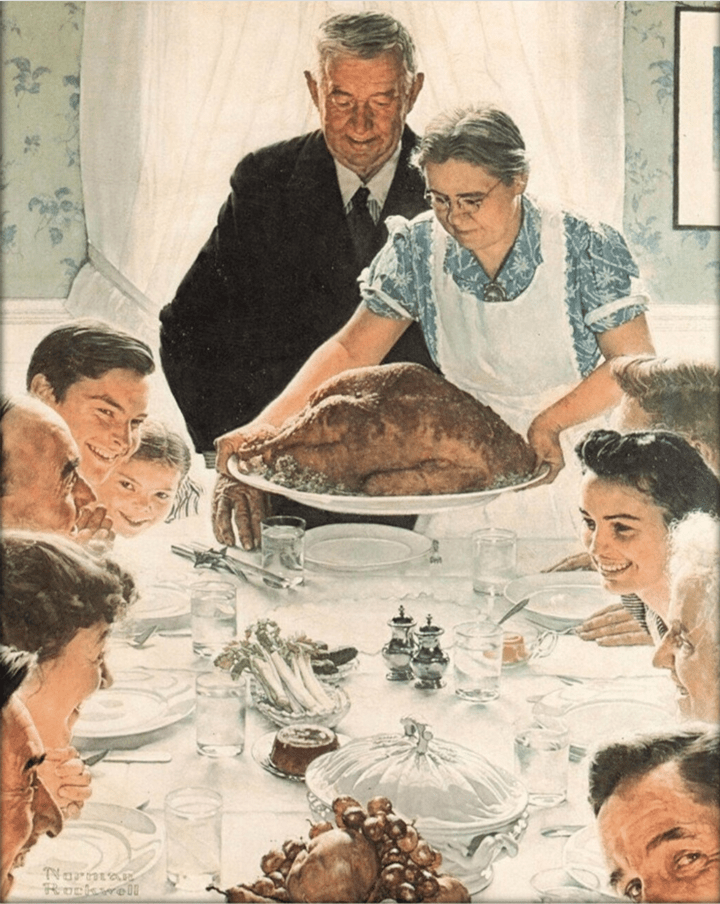
The Seeds You Plant Determine What You Harvest.

After God promises blessings to the obedient, he promises curses to the disobedient. But one thing remains consistent: PEOPLE REAP WHAT THEY SOW.

If you do not observe My commands and you break My covenant, I will bring terror on you—wasting disease and fever that will cause your eyes to fail …. I will turn against you, so that you will be defeated by your enemies…. I will proceed to discipline you seven times for your sins…. I will send WILD ANIMALS against you that will deprive you of your children, ravage your livestock, and reduce your numbers until your roads are deserted…. I will send pestilence among you….  Ten women will bake bread in a single oven…. I will act with FURIOUS HOSTILITY toward you…. You will EAT THE FLESH OF YOUR SONS, YOU WILL EAT THE FLESH OF YOUR DAUGHTERS…. I will reduce your cities to ruins…. I will put ANXIETY in the hearts of those of you who survive… the sound of a wind-driven leaf will put them to flight” Leviticus 26:15-36.

I counted TEN CONSEQUENCES of sin.  How many can you find?

God offers his people choices: a carrot and a stick. You can drive a mule by dangling a carrot on a string in front of him and he will walk toward it pursuing the reward, or you can beat him with a stick and he will walk away from the stick, pursuing an end to his pain.  We do the same.  Sometimes we are motivated by rewards, other times by pain.  For example, I am motivated by competition, grades, and academic rewards.  But I am also motivated by debt, joblessness, and looming financial disaster. 

I believe the best of us, the most earnest, devout Christians, remain subject to both God’s carrot and his stick. But no matter your circumstances—never take your eyes off his GRACE. 

And remember: YOU REAP WHAT YOU SOW—AND YOU REAP MUCH LATER THAN YOU SOW.

ΑΩ

You Reap What You Sow. Leviticus 26:3-8.

God created the world to follow rules. Science was based on the Christian notion that if God is a God of order, then his creation must also be ordered, and thus, Creation should be predictable. Pagans and other religions had always believed creation was controlled by random chance or the cavalier whims of uncaring gods.  Before Christians proved that Creation was predictable, there could be no science. Science means guessing at a rule (a hypothesis) and using experiments to prove or disprove that hypothesis—and that only works if creation is known as an entity that NEVER CHANGES. It is predictable.

Another rule that applies to our world is that you REAP WHAT YOU SOW.  That is, you harvest what you plant.  If you plant good things, you will reap good things. If you work hard, you will be rewarded. If you are lazy, you will not. Farming is an excellent example:

If you follow My statutes and faithfully observe My commands, I will give you rain at the right time, and the land will yield its produce, and the trees of the field will bear fruit. Your threshing [part of harvesting] will continue until grape harvest, and the grape harvest will continue until sowing time. You will have plenty of food to eat and live securely in your land.  I will give peace to the land, and you will lie down with nothing to frighten you. I will remove dangerous animals from the land, and no sword will pass through your land. You will pursue your enemies and they will fall before you by the sword. Five of you will pursue 100, and 100 of you will pursue 10,000” Leviticus 26:3-8.

Sure, there are exceptions: Job suffered though he did NOT deserve it—and sometimes we are spared suffering that we DO deserve. But most of the time, you REAP exactly what you SOW. Finally, remember, you REAP much LATER than you sow.  Have patience. Turn your life around. Begin good habits. Stop bad habits.  But don’t expect instant results. 

YOU REAP MUCH LATER THAN YOU SOW.

Keep sowing good things!

ΑΩ

The Bundle of Sticks

Can a man own land?  The English enshrined property above all else.  An Englishman holding title could sell land, rent it, sell some rights and reserve others—anything a seller could conceive.  Land ownership was compared to owning a bundle of sticks.  A man walking home with firewood on his back might sell you one stick, but keep the rest.  So it is with land.  He might sell you an easement for a cable TV wire or the right to drill for oil—but keep the rest.

Compare that to the traditional view of Native Americans.  Though research indicates Indians had as many conceptions of property ownership as there were tribes on the continent, the common understanding is that they viewed land as a resource to be used, not owned. To some, the notion of land ownership was as crazy as the notion of owning air or sunlight.

What does the Bible say about land ownership?  You might be surprised.

The land is NOT to be permanently sold because it is Mine, and you are only foreigners and temporary residents on My land” Leviticus 25:23.

God gave His people the Promised Land, dividing it among tribes, clans, and families.  If a family sold its land, it would be returned during the Year of Jubilee (every 50th year).  Imagine that connection to real property.  On the one hand, it belongs to God—He literally said “the land is MINE.”  But on the other hand, your family is tied to it for hundreds of years, and if you are forced by poverty to sell the land, it will be returned in the year of Jubilee. 

APPLICATION?  GOD OWNS THE LAND.  We are stewards, not owners.  I take care of the land because I want to leave it in better condition than I found it—and I want to please God by honoring the gifts He has entrusted to me.  I also consider the environment.  I don’t want to pollute the land where my well is located.  But I also don’t want to pollute the planet—because the EARTH BELONGS TO HIM.

ΑΩ

Provision.

I paid bills yesterday. First I sent money to the church. And it was sort of hard. I thought about the way that I feel disconnected from my church: I don’t teach Sunday school, many worship from home, I attend the Cypress campus for convenience but not out of a sense of calling. I’m in no choir. My college kids attend elsewhere (FOR WHICH I AM SO GRATEFUL), and if I drive to the Loop campus, it’s sparsely attended this year due to COVID-19, and my parents definitely won’t be there. On top of that—the money was difficult to send to the church following an unexpected car repair. 

But God asks for the tithe. And the church meets needs: that money will bless poor people around the world with food, shelter, and the gospel message. People who need Jesus will be blessed. And honestly, when you feel disconnected from church, that’s the time to give MORE, not less. Giving IS connecting. And giving is an act of worship, a demonstration of faith in action. Giving says, “God, I trust you to meet my needs.”

God asked His people to give not only tithes, but to trust Him by taking the 7th day off—the sabbath was holy. Jews were faithful about the Sabbath; the orthodox continue to be amazingly disciplined about it.

But God also told them to take every seventh year off from farming, to let the ground rest and to TRUST GOD to provide. The people seem to have conveniently ignored this command. God dealt with their disobedience 490 years later by having all the people carted off to Babylon for 70 years so the land could have the 70 years of rest it was owed.

But it never had to be this way. God promised to provide:

“When you say, ‘What shall we eat in the seventh year if we do not sow nor reap?’ Then I will command my blessing upon you in the sixth year and it shall bring forth fruit for THREE years. And when you sow in the eighth year, you will still be eating from the sixth year even until you reap in the ninth year.” Leviticus 25:20-22.

You can give. You can make sacrifices. And you can trust God to take care of you, no matter what.

He is our PROVIDER. He always will be.

ΑΩ

Holidays and Celebrations.

Do you ever wonder what God thinks about all our celebrations? Isn’t our calendar full of holidays, covering topics from the sublime to the ridiculous? Many Americans decorate their yards nearly year-round: Valentine’s, Saint Patrick’s Day, Easter, July 4th, Halloween, Thanksgiving, Christmas. Advertisers go even further: President’s Day Sale!, April Fool’s Folly!, Cinco de Mayo Special!, Memorial Day Savings Event!, Labor Day Selloff!, Veterans Day Savings!, New Year’s Blowout!, etc. Greeting card companies make a fortune on these, plus Mother’s Day, Father’s Day, Boss’s Day, Secretary’s Day, Pastor Appreciation Sunday, and more. And in addition to these somewhat universal American days, there are regional, ethnic, and religious days: Chinese New Year, Mardi Gras, Ash Wednesday, Cinco de Mayo, Yom Kippur, Rosh Hashanah, Hanukkah, and Ramadan.

But again, what does God think about all these special days? Is He for holidays or against them?

First, the obvious—God would not approve of the debauchery that is so common around holidays. Saint Patrick was a missionary, for example. He was an English boy kidnapped and enslaved on an Irish ship. He learned the language. Years after his release, he heard God calling him to share the gospel with the Irish people. Think of him as the Billy Graham of fifth-century Ireland. Would Patrick be honored by people who drink until they pass out in his name? This is a Christian hero who sacrificed an easy life in England to follow God’s call. I believe many of today’s celebrations dishonor him. The same is true for so many holidays. God’s standards do not change for special days.

In addition, many of our holidays have origins that do not honor Christ. They may be harmless, but should be handled with wisdom: consider the origins of Halloween (as opposed to “Reformation Day”), Easter (as opposed to “Resurrection Day”), Mardi Gras/Fat Tuesday (a day to get fat on rich foods before giving them up for Lent), and the various holy days from other religions.

We must never use a holiday as an excuse to sin, whether with food, drink, sex, or anything else. In fact, many Biblical holidays include days of self-discipline, days without work, days with special diets, and some days of feasting.

However, with that caveat (“qualification” or “warning”), we should note that God INVENTED holidays. (After all, the English word “holiday” is a shortened form of “holy day.”)

The Old Testament is filled with holy days. God knows we need “punctuation” in our time. We need breaks—day, night, summer, winter, work, rest, one day off every week, and special holidays throughout the year. In Leviticus chapters 23-25, God explains the special days on the calendar, beginning with this verse:

These are my appointed times, the times of the Lord that you will proclaim as sacred assemblies.” Leviticus 23:2.

  1. The Sabbath Day—52 days a year
  2. Purim—(celebrates deliverance by Esther from Haman)
  3. Passover—7 days
  4. The Feast of Unleavened Bread
  5. Firstfruits
  6. Pentecost/Shavuot
  7. Rosh Hashana—2 days (Jewish New Year)
  8. Yom Kippur (Day of Atonement)
  9. Feast of Tabernacles—7 days.
  10. The Sabbatical Year (every 7th year)
  11. The Year of Jubilee (every 50th year)

Even though I can tend to be a non-participator (I admit it!), I know from reading the Bible that God loves special days, festivals, days off, special years, and more. He built into the Jewish calendar numerous opportunities for the people to remember God, to repent, to worship, to give thanks, and to get to know God better.

Dear God, show us how to celebrate you! May our years be filled with special days, and may we use them to get to know Jesus better.

ΑΩ

Why Do We Obey?

God provides reasons to obey His laws. Most obvious? To avoid punishment. Consider:

  1. If a man commits adultery with a woman—death penalty. Lev. 20:10.
  2. If anyone sleeps with a close relative—death penalty. Lev.20:11-12.
  3. If a man sleeps with a man—death. Lev.20:13.
  4. If a man marries a woman and her mother—death to all by fire. Lev.20:14
  5. If a man sleeps with an animal—death to both. Lev.20:15.
  6. If a man marries his half-sister—banishment. Lev.20:17.
  7. If a man sleeps with a menstruating woman—banishment. Lev. 20:18.
  8. If a man sleeps with his aunt—barrenness. Lev.20:20.
  9. If a man marries his brother’s wife—barrenness. Lev.20:21.

These punishments are SEVERE and are a warning that God takes them seriously. He knows we need the fear of consequences. When we are tempted, sometimes only the fear of horrible consequences can stop us. But as we grow in Christ, a more important motive should begin to motivate us—God’s holiness, and our love for our holy, loving, saving God. It begins at Leviticus 19:2:

“Be holy because I, Yahweh your God, am holy.”

He repeats this reason over and over. No idols—I am Yahweh. Be compassionate—I am Yahweh. Be honest—I am Yahweh. Do not gossip—I am Yahweh. No revenge—I am Yahweh. Do not gash or tattoo yourselves—I am Yahweh. Observe the Sabbath—I am Yahweh. Honor the elderly—I am Yahweh. Be kind to foreigners—I am Yahweh.

Twenty-two times this phrase is repeated.

“You are to keep my commands and do them; I am Yahweh.” Lev. 20:22-23.

Obey God because you fear the consequences—we reap what we sow. If you plant sin, problems will grow in your life. But may God help us begin to obey Him because we love Him and He is holy. Ask Him to help you want to obey Him.

ΑΩ

“Do Not Be Partial…”

Can you be neutral? Can you listen to both sides before reaching a decision? Can you be objective when every friend and family member and church member, work associate,—EVERYONE is on the same side?  And they expect you to join them?  Can you RESERVE JUDGMENT?

Most cannot.  But here is a Biblical principle that will provide some guidance:

Do not be partial to the poor or give preference to the rich. Judge your neighbor fairly.” Leviticus 19:15.

Most of us think we would never automatically favor someone based on their poverty or wealth. Yet everyone does it.  American liberals are “partial to the poor,” and American conservatives “give preference to the rich”—or at least the gainfully employed members of the middle-class.  When a defendant enters court with a certain look, or vibe, certain clothing or tattoo choices, liberal jurors may immediately assume he has had a tough life and look for ways to excuse his failures—while conservative jurors may assume he has made a lifetime of bad choices and it’s time for him to face the music.  Both are wrong: YOU MUST RESERVE JUDGMENT UNTIL YOU SEE THE EVIDENCE.

This is also true in the area of journalism.  Reporters must not “be partial to the poor” or “give preference to the rich.”  Yet they do both constantly.  Many news outlets have all but given up the pretense of telling both sides of the story.  Instead, they tell only the side they prefer. Liberal news outlets (nearly all traditional newspapers and broadcasts) have a left-leaning bias, causing them to tell stories in ways that make the poor and downtrodden look like victims of “society’s failures,” as if the poor are children who bear no responsibility for their actions.  Conservative news outlets, by contrast, tell the same stories in a manner that make the poor and downtrodden look like evil-hearted criminals who can never be reformed and should be locked up forever.

Both are wrong.  But we cannot change journalism.  What we can do is RESERVE JUDGMENT and listen to news reports from both sides.  That is the only way to ensure that we are neither favoring the poor nor the rich, but are “judging our neighbors fairly.”

ΑΩ

Your Parents May Be Out of Touch, But God is Not.

It is easy to think parents have no idea what the world and its temptations are like. Parents talk about things like not drinking (you mean “AT ALL”?) or remaining a virgin until marriage, or not smoking, or not skipping classes, or whatever else—and it is easy to think these old people are out of touch.

Well… FALSE.  But even if it were true, God is not out of touch. His standards are incredibly high.  He says, “be holy, as I am holy,” (1 Peter 1:16) and “be perfect, as your heavenly Father is perfect,” Matthew 5:48.  But at the same time “he knows what is in man” (John 2:25), and he addresses the details. 

For example, though God says do not have sex before or outside marriage, he also provides numerous rules for those who do.  Why? Because he is realistic about peoples’ failures.  Further, God knows PEOPLE DO NOT UNDERSTAND BOUNDARIES.  So he makes it clear: You must not have sex with– any close relative, including a parent, step-parent, sibling, step-sibling, half-sibling, grandchild, aunt or uncle, daughter or son-in-law, brother or sister-in-law, and more, Leviticus 18:6-16.

But isn’t sex all fun and laughs? What difference does it make? Didn’t God see the movie RUMOR HAS IT, where Kevin Costner sleeps with a grandma, mom, and granddaughter? (The movie bombed, by the way.)

You are not to have sexual intercourse with a woman and her daughter… They are close relatives; it is DEPRAVED” Lev. 18:17.

God knows how wicked and corrupt people can be, perverting His design.  He does not simply announce an unattainable rule—BE HOLY—but He also specifically addresses many situations that may come up in the lives of imperfect people. He provides DETAILED, SPECIFIC guidance.

But you have to take the time to read the OWNER’S MANUAL. Study the WORD and let Him instruct you.

God, thank you for understanding our weaknesses. Teach us how to live lives that please you.

ΑΩ

Boundaries.

Throughout Leviticus, God provides laws that should not have been necessary. In 17:15, He says don’t eat roadkill (tempting, right?): “Every person … who eats an animal that died or was mauled by wild beasts… will be unclean.” God is realistic—He knows people will take things too far and push the boundaries.

The same is true for sexual relations. If you don’t think so, consider television. I once complained to my wife that though Breaking Bad (TV-MA) includes very little sex, what it does include is … “unusual.” Nothing traditional happens. The same is true for most television. If you kept a record, the people audiences see in bed together are married—to each other—about one time out of a hundred. The other 99 times, the sex is OUTSIDE the Biblical rules.

God is not surprised by that. He takes the time to clearly state some rules, providing guidance for a culture (like ours) that has moved WAY BEYOND the simple extra-marital affair. He realistically addresses other issues:

“You are not to come near any close relative for sexual intercourse. You are not to have sex with your father’s wife; it will shame your father. You are not to have sex with your sister [or half-sister]… You are not to have sex with your son’s daughter or your daughter’s daughter, because it will shame your family. You are not to have sex with your father’s sister; she is your father’s close relative… You are not to have sex with your daughter-in-law, or your brother’s wife, or your aunt… You are not to have sexual intercourse with a woman and her daughter… they are close relatives; it is depraved. You are not to sleep with a man as with a woman; it is detestable. You are not to have sexual intercourse with any animal… it is a perversion.” Leviticus 18:6-23.

God is Holy, but God is NOT naïve. He knows what is in the hearts of people. Thank Him for being merciful enough to provide clear guidance. Ask Him to help you obey.

ΑΩ

Do Not Add a Second Sin to the First.

It is easy for the naïve to assume the best.  But God is not naïve.  “Jesus knew what was in the heart of man” John 2:25.  In situations where well-meaning parents or teachers might think minimal guidance is enough, God spells things out in detail.  Consider sexual sin, for example.  Most of us think there’s one rule: no sex outside of marriage. 

But God “knows what is in the heart of man” and thus, provides great detail, addressing some of the more unusual situations—situations that are not unusual at all on TV situation comedies and rom-com films like “Rumor Has It.” 

But this is no laughing matter: 

Do not have sex with close relatives for that is depraved: mothers or stepmothers, sisters, stepsisters, or half-sisters, daughters, grand-daughters, or step-granddaughters, aunts, daughters-in-law, sisters-in-law, or any mother and also that mother’s daughter. Don’t marry two sisters. “Do not have sex with a man as with a woman; it is detestable. You are not to have sexual intercourse with any animal, defiling yourself with it; it is a perversion.” Leviticus 18:1-23.

God is a realist; He knows people—even the people of Israel—will violate the simple rule prohibiting sex outside of marriage.  Knowing the first rule will be broken, God warns us not to add a SECOND sin.  It’s as though He says, “if you must fornicate, do not ALSO violate a close family member.  If you must fornicate, do not also violate your nature by exchanging sex with a woman for sex with a man or an animal. 

Why the extra warning? Because each additional sin comes with additional consequences.  What consequences?  Consider the Promised Land.  God is going to overthrow every nation living there because of their depravities, perversions, and detestable acts.  If Israel sows the seeds of the sins of the Canaanites, Israel will reap the same harvest, the grapes of God’s great wrath.  So He warns His people: do not add a second sin to the first. 

ΑΩ