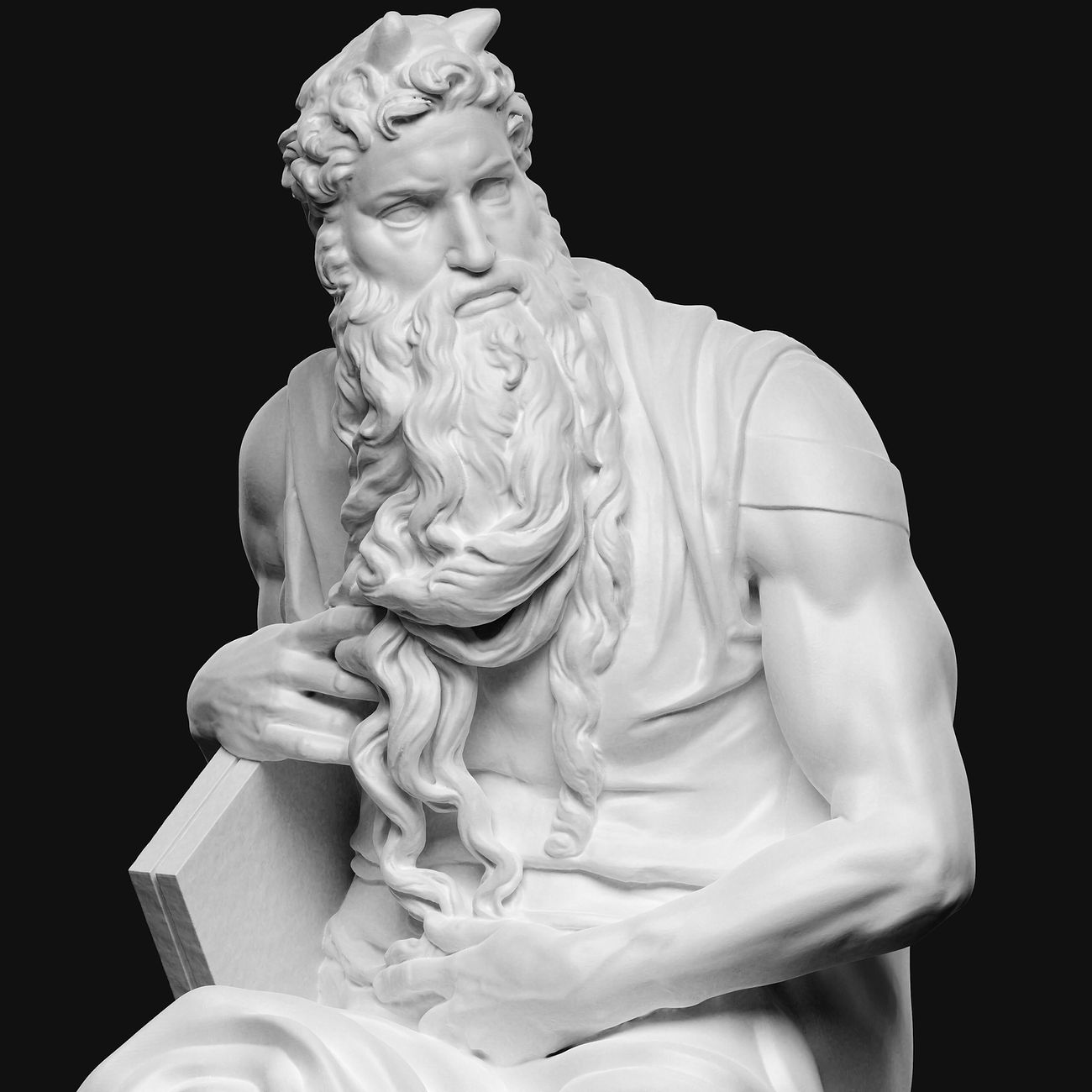
Aaron and Moses: Two Kinds of Leaders.

When the Israelites complained, Aaron made an idol and they partied like drunken frat boys. God told Moses:

Go down at once! For your people you brought up from the land of Egypt have acted wickedly. They have made for themselves an image of a calf. They have bowed down to it, sacrificed to it, and said, ‘Israel, this is your God, who brought you up from the land of Egypt…’ Now leave me, so that my anger can burn against them and I can destroy them. Then I will make you a great nation” Exodus 32:7-10.

God says He will destroy them and start over with Moses. But Moses intercedes for the people.

Then Moses asked Aaron, ‘What did these people do to you that YOU HAVE LED THEM into such grave sin?’  Aaron answered, ‘They said, ‘Make us a god because this Moses, we don’t know what has happened to him!’ so I said, ‘Whoever has gold, take it off,’ and they did. WHEN I THREW IT INTO THE FIRE, OUT CAME THIS CALF!’ Moses saw that AARON HAD LET THEM GET OUT OF CONTROL, resulting in WEAKNESS before their enemies.” Exodus 32:21-25.

Aaron did not stand for what was right, but let the people push him into sin. He lacked the courage integrity creates in a leader. He actively assisted in their sin—by making the idol.  Aaron was a politician—pleasing the crowd was more important to him than pleasing God.

And what is wrong with this: ‘When I threw it into the fire, out came this calf’?  PASSIVE VOICE. Aaron is not facing his guilt. He lacks EXTREME OWNERSHIP. When a true leader fails, he faces it honestly.

Aaron:

LACKS INTEGRITY—

+ does not stand for truth

+ values pleasing people more than pleasing God

+ lets people get out of control

+ lets them be weak before enemies

+ cannot own his own guilt

= COWARDICE.

Moses

HAS INTEGRITY—

+ stands for truth

+ puts God first

+ intercedes for his people

+ not interested in his own glory/being father of a great nation

+ punishes wrongdoing

= COURAGE.

ΑΩ

Passive Voice of Biblical Proportions.

You know what passive voice is? It’s the opposite of Jocko Willink’s “extreme ownership.” Writers and English teachers deride passive voice because it is an attempt to conceal the cause of things, such as when you say, “the lamp fell and broke,” rather than “I broke the lamp.”

In Exodus 32, Aaron employs passive voice. After Aaron listened to the people, collected thousands of pieces of gold jewelry, melted it and molded it into a golden calf, Moses asked him what happened. 

They brought me their gold, I cast it into the fire, and out came this calf.” 32:24.

What? It just magically popped out? If you’ve ever sculpted anything, you know that’s not true. Aaron put a LOT of work into his idolatry. But he was afraid to face Moses and speak honestly about it. So he used passive, rather than active voice.

When you sin, don’t diminish it. Let’s be honest about it. Take ownership. True confession is the first step toward repentance and real change.

ΑΩ

Integrity is More Than Telling the Truth.

You can WORK with integrity. 

How? By doing your best, by not cutting corners.  Give it your all. 

You can also READ with integrity. 

Integrity requires not giving up until you fully understand.  That may mean reading over and over or looking things up, or asking for help.  When you read with integrity you grab the book and wrestle it to the floor, insisting it share with you all its secrets.  Think of reading as hand-to-hand combat.  Being passive—letting your eyes roll over the print one time whether you comprehend it or not—is not integrity.  Make the book surrender everything! Don’t let your eyes glaze over and keep going.  Stop!  Go back!  Figure it out.

Finally:

You can WRITE with integrity. 

How? By speaking directly.  Integrity means being straightforward.  Trim away the decorative language we use to minimize bad news.  In some contexts (not all) you must be professional and direct.  The “fluff” must go.

Writing with integrity also means NEVER using passive voice.  Example: “the ball was thrown.”  This construction lacks integrity because it fails to identify WHO threw the ball. Active voice would say, “Paul threw the ball.”  Consider this Biblical example of passive voice:

Aaron replied, … “I said, ‘Whoever has gold, take it off.’ And they gave it to me. When I threw it into the fire, out came this calf!’” Exodus 32:24

Imagine Moses: “So you threw gold into the fire and a calf magically appeared?”  It’s absurd.  But Aaron could not face what he had done.  He was ashamed and though he told the truth (sort of), his instinct to shade the truth or “spin” was so strong he blamed the fire for creating the golden calf.  He sounds ridiculous.  Passive voice usually does.

WORK with integrity by doing your best.  READ with integrity by never giving up.  WRITE with integrity by using active voice and not trying to hide failures.

God, give us the courage to act with integrity in all that we do.

ΑΩ

The Bible is Full of Practical, Everyday Wisdom.

College professors love theory. One favorite question is “How many angels could dance on the head of a pin?”  But when profs talk theory, students lose interest, answering “So what? What does that have to do with my life?” 

Some think the Bible is like that too: ALL THEORY, and that scripture is all deep truths about Creation, Sin, and Eternity and topics such as why we should believe in a pre-millennial, dispensationalist view of end times.

But in fact, the Bible is a practical HOW-TO Book.  There are instructions on: how to cook meat, fight battles, train children, run a business or a bank, and handle the sick, particularly those with dangerous, contagious diseases, and hundreds of other topics. 

The Bible even explains how to handle your bathroom business (could there be anything more practical?):

You must have a place outside the camp to go and relieve yourself. And you must have a spade in your equipment, so that when you relieve yourself you can dig a hole and cover it. For the Lord your God walks through your camp to protect you and deliver your enemies to you. Your camp must be holy….” Deuteronomy 23:13.

When God gives Moses the plans for a tabernacle (the mobile temple), He addresses an equally practical concern: underwear.

Make linen undergarments to cover the priests’ naked bodies. They must extend from the waist to the thighs. These must be worn by Aaron and his sons whenever they enter the tent of meeting or approach the altar to minister in the sanctuary area, so that they do not incur guilt and die” Exodus 28:42-43.

If I needed convincing, this verse would be enough for me: WEAR UNDERWEAR.  Wear underwear “so you don’t incur guilt and die.”  Ha ha.

But seriously, never be deceived into thinking the Bible is all theory and nothing practical. In contrast to many books in religion or philosophy, the Bible is FILLED with practical advice for EVERY AREA of life.  You just have to take the time to read it.

ΑΩ

WORK. Exodus 26.

I heard an interesting conversation on DOWNTON ABBEY. The new heir, a distant cousin from the city who is not used to being waited on, talks to Lord Grantham, suggesting he does not need servants.

Perhaps not. But would you take from a man the dignity of his work? Would you cast the cooks and the maids out into the street? Would you tell the valet and the chauffer that their contribution is no longer needed, that they have become superfluous?” (Paraphrased.)

After that, Matthew accepts the servants’ help because he understands they need the dignity of work. People need to be busy, to be challenged, and to believe what they are doing matters.

God knows our need for work and gives us important tasks. There are times when our work is essential. We ABSOLUTELY needed all the help we could get mucking out my parents’ house after the pipes burst and flooded her carpets. I am thrilled that all four of us were available and able to serve them in that way. We made a HUGE difference!

I’ve been reading about the Tabernacle in Exodus 26. The woodwork alone, using hand tools, must have taken months. God could have spoken it into existence instantly. But instead, He gives work to His people. (And work is NOT a punishment—Adam had work in the Garden BEFORE he sinned.) God is kind and generous—He gives us down time and rest, and one day in seven in which we are to do no work. But the work He provides gives us dignity, challenge, and a sense of accomplishment. For example, last night we somehow broke the hydraulic spring that hold Grandpa’s glass front door open. But I fiddled with it, found all the missing parts, and managed to fix it. Figuring it out made me feel great.

Thank God for the amazing gift of work—whether paid employment, academic work, or hobbies. God is glorified by all. Ask Him for a strong work ethic, and a sense of calling to those things He DESIGNED you to do.

ΑΩ

I’ve Never Seen a Hearse Pulling a U-Haul: You Can’t Take it With You.

Do you give? Are you giving to God’s kingdom the way He directs you to?

You have to start now. It’s so much easier when you are young and you have no bills and few expenses. Pray and ask God what He wants you to give.

God asked the children of Israel to give right after they left Egypt.

“The Lord spoke to Moses, ‘Tell the Israelites to take an offering for Me. You are to take an offering from everyone who is willing to give.” Exodus 25:1-2.

Are you willing to give? God will not force you. But He rewards givers so greatly, you would be foolish NOT to give. Remember, “God loves a cheerful giver” 2 Corinthians 9:7.

Giving can be very exciting! It should not be drudgery. In ancient Israel, giving meant you had a part in building a nation. Givers donated to build temples, royal palaces, and walls to protect cities. In the early U.S., givers built hospitals, universities, and more. Those who gave were proud of that. They knew they were a part of something great, a God-sized project larger than themselves.

In the New Testament, giving meant funding missionary journeys so apostles could take the gospel all over the known world. Giving also meant helping preachers feed their families, and helping persecuted Christians secure freedom and safety. These projects were huge and important and those who gave were excited about being a part of God’s adventure.

Today we give for the same reasons: your money helps share the gospel. It pays for a dynamic, engaging church, where families can find hope and healing through counseling, Sunday school and preaching, worship music—the money you give changes lives at your home church. But of course, some of your money pays for missionaries around the world. That money saves souls. PEOPLE WILL BE IN HEAVEN BECAUSE YOU GAVE. Like the song says, in heaven people will say to you, “Jesus took the gift you gave, and that’s why I’m here today.”

But God wants you to be willing. He told Moses to “take an offering from everyone who is WILLING to give.” And centuries later, Paul wrote “God loves a CHEERFUL giver.”

Are you willing? Are you able to give with a cheerful heart? Do you believe that God knows your needs and He will take care of you? If you do, then you should have no fear in giving.

“Jesus said, ‘Truly, I say to you, there is no one who has given up houses or brothers or sisters or father or children or farms, for My sake and for the gospel’s sake, who will not receive a HUNDRED TIMES as much now in the present age—houses, and brothers and sisters and mothers and children and farms, along with persecutions, and in the age to come, eternal life.’ Mark 10:28-31.

So you can give. You can give until it hurts. God will reward you, both in this life and in the life to come. And remember, this life is a tiny, tiny dot, compared to the never-ending line that is eternity. Giving is how you store up heavenly treasure—the only treasure that really matters. What you give on earth becomes a deposit in your bank account in heaven. Or another way to put it:

“You can’t take it with you, but you CAN send it on ahead.”

Dear God, give us the discipline and the courage to give to you. Help us to trust you with our lives—every moment, our hobbies, our jobs, our pay. We give our lives completely to you. Use them. Use them UP. We love you.

ΑΩ

Would You Stop for the Burning Bush?

While Moses was shepherding his father-in-law’s sheep, he saw a bush that was burning, but not burning up.  Moses said “I must turn aside and see this marvelous sight…!” Exodus 3:2-4.

Burning but not burning up is an indication of holiness.  This was a special fire, a holy fire, a fire that lit up the bush without destroying it.  And when Moses saw this holy thing, he investigated.  God confirmed the holy nature of the moment and the place when He told Moses to take off his shoes, “for the place on which you stand is holy ground” Exodus 3:5.

Question: Why was the bush on fire in the first place?  Did the bush continue to burn?  Years later, for example, when Moses brought the Israelites back to the mountain—was the burning bush still burning?

Moses seems to have climbed this mountain seven more times, yet the bush is not mentioned again.  The Bible does not indicate the bush remained on fire there like some eternal flame.  It seems God created this burning bush specifically to arouse the curiosity of Moses.  God could have simply spoken to Moses.  But God wanted to see whether Moses would be curious about this holy sign.

When the Eternal One saw Moses approach the burning bush TO OBSERVE IT MORE CLOSELY, He called out to him from within the bush, “Moses! Moses!”  Exodus 3:4.

Has God ever aroused your curiosity? Have you ever stopped what you were doing (as Moses stopped driving the sheep) to observe something more closely?  Do you allow things to make you curious? Do you cultivate curiosity?

Think about this:

If Moses were a dad driving his family on a cross-country road trip, he would stop the car to observe a burning bush.

Would you? 

God, ARREST OUR ATTENTION.  Give us curiosity about Your activity in the world around us.  Make us fascinated with all things holy.  Never let us miss the amazing things of God in our quest to complete a to-do list or reach an equally arbitrary destination.

ΑΩ

Do You Still Think Like a Slave?

Remember when Moses went up the mountain and God gave him the Ten Commandments? Moses was up there for forty days. And what did the people do? They worried. They fretted about the absence of their leader and told his brother Aaron, “Come, make us a god who will go before us, because we don’t know what has happened to Moses.” Exodus 32:1.

How did Aaron reply? Did he remind them of the ten plagues? Did he say, “Don’t you know that God just destroyed all the idols of Egypt? Our God is a miracle worker, the only real God, the God of Gods! How can you turn on Him so quickly?”

No.

Instead, Aaron said, “Take off the gold rings that are on the ears of your wives, your sons, and your daughters, and bring them to me.” Exodus 32:2. And you know the rest—Aaron made a golden calf. By the time Moses came down the mountain, the sons of Israel were dancing and worshipping the calf like naked pagans drinking blood in some dark ritual. What happened?

Normally this is where I would point to a verse that explains the Hebrews’ fall. But not this time. It gets worse.

Not only did the people witness the plagues, and cross the sea on dry land. Not only did God work never-before-seen miracles. But just before Moses went up the mountain, God did something even more extraordinary.

Moses, Aaron, Aaron’s sons, and seventy of the leaders of Israel—men from every tribe—SAW GOD.

They saw the God of Israel. Beneath His feet was something like a pavement of sapphire stone, as clear as the sky itself. God did not harm the Israelite nobles [as expected, because no one can see God and live], they saw Him, and they ate and drank. Then the Lord said to Moses, ‘Come up to Me on the mountain and stay there so that I may give you the stone tablets…’” Exodus 24:9-12.

When Moses went up the mountain, his brother Aaron, Aaron’s two sons, and another SEVENTY leaders had just seen God. They SAW HIM. It must have been an awesome vision. How many people on earth have EVER seen anything like that?

Where were these men when the people started fretting about Moses? Where were these leaders when the people started crying out for an idol? Aaron was a part of every conversation Moses had with Pharaoh. Why didn’t Aaron step up? What about his sons, and the other seventy men? THESE 73 MEN HAD SEEN GOD.

But when Moses came down the mountain, the people had turned their backs on God and were worshipping one of Egypt’s recently-humiliated idols, a golden calf.

This was a failure of leadership. Hundreds of thousands saw the miracles. An additional 74 men had seen God. But only Moses could destroy the idol and turn the people back to God. The other 73 men were passive.

Only Moses had grown up with power and privilege in the home of Pharaoh. All the others were slaves, raised by generations of slaves. They were not used to making their own decisions. They were not used to self-control, self-determination, or self-discipline. They still thought like slaves, allowing other people or their own emotions or passions to determine their choices. SELF-RELIANCE, an ancient American value, is impossible for slaves—they are trained NOT to rely on themselves.

SLAVES ARE NOT USED TO MAKING THEIR OWN DECISIONS. SLAVES DON’T TAKE RESPONSIBILITY FOR THEIR ACTIONS. SLAVES ARE PASSIVE, CONTROLLED BY OTHERS AND UNABLE TO MAKE CHOICES OR EXERCISE WILL POWER–THE POWER OF THE WILL. BUT YOU ARE NO LONGER A SLAVE.

You and I are not slaves. We have never been slaves. May it never be that we are so passive we allow ourselves to be led into sin. We must FIGHT temptations. We must FIGHT peer pressure. We must FIGHT laziness and compromise. We must FIGHT the fear that keeps us from speaking up and taking a stand for God. We must FIGHT for what’s right. God has blessed us. We have seen amazing things, we have attended an amazing church, we have seen God move. We must never tolerate the creeping allegiance to the idols of this world. We must say no to things. We must FIGHT to remain true and loyal and obedient to Jesus.

Are you fighting the good fight today?

ΑΩ

Foreigners.

In the 1980s, Sharpstown High School welcomed a sudden influx of refugees fleeing the Communist government of Vietnam.  The students showed up knowing no English and carrying a pass that entitled them to free lunches.  Every day three of the loudest non-English speaking Vietnamese girls would cut the line in the lunch room to grab their free lunches. We would complain and they would scream at us in their language and it became a daily shouting match. Those of us who were born here were not sympathetic.  We hated them. 

“Get to the back of the line!” 

“Our taxes are paying for your lunches!”

“Hey Lunch Lady, those girls cut the line again, like they always do! When are you going to do something about it?”

Of course, those three did not represent the norm.  Most of the refugee kids were quiet and kept to themselves.  And the truth is, our scorn was probably the reason those girls were so brazen.  They refused to cower or to shamed in any way.  Deep down, I knew it had to be so hard.  I hated studying Spanish; I could not imagine suddenly having to live in Mexico and go to a Mexican school.

What does God require?  COMPASSION.

You must not exploit a foreign resident or oppress him, because YOU WERE FOREIGNERS IN THE LAND OF EGYPT” Exodus 22:21.

Statements like this one are repeated over and over: see Exodus 23:9, Leviticus 19:33, Deuteronomy 10:19, 23:8, 24:17.  The Israelites were foreigners in Egypt for 400 years! Why so long?  Perhaps part of the reason was to emphasize the importance of compassion.  God expects us to be kind to the foreigner.  As Christians, we know what it’s like to be a foreigner in a foreign land.  We often do not fit in, surrounded as we are by people who view the world differently.  We are foreigners too: we must have compassion.

God, give us patience, compassion, and love for the foreigners around us, for the poor, the disenfranchised, the oppressed, the outsiders.  May we forget the politics and see them as people for whom Christ died.

ΑΩ

Divorce and Abuse.

Paul teaches that husbands and wives can be witnesses to unbelieving spouses and should not seek to divorce them:

If a woman has an unbelieving husband and he is willing to live with her, she must not divorce him. For the unbelieving husband is sanctified through his believing wife…. But if the unbeliever leaves, let him go.  God has called you to live in peace. How do you know whether you will save your husband….?

1 Corinthians 7:12-15.

Some counseling programs argue this scripture indicates women should not leave abusive husbands.  Instead, they should endure black eyes and broken bones hoping the men will repent because of their example.  These counselors encourage abused women to go to the church for help but not to the police unless they fear for their lives. 

THERE ARE SO MANY THINGS WRONG WITH THIS!

  1. It’s a matter of integrity. God wants the family SAFE! When a man becomes violent, he’s crossed the line.  (And he will NOT listen to the church! Are you kidding? It’s laughable.)
  2. Children are better off safe with a single mom than in a violent home.  These counselors say leave if your life is in danger—but who can predict when wife abuse will become murder or child abuse?
  3. As for evangelism, bullies are NOT influenced by one they don’t respect.  Abusers are more likely to repent after their family has left them or the police have locked them up.  It is LAW and CONSEQUENCES that will bring repentance.
  4. The Bible prescribes punishment for those who abuse slaves.  “If a man smite the eye of his maid, so that she lose it, he shall set her free for the eye’s sake.  And if he knock out his servant’s tooth, he shall let him go for his tooth.” Exodus 21:26-27.  If an abusive master must release his slave for being violent, do we really believe God expects a wife to stay put? Is the wife’s worth lower than that of a slave?

Finally: Hiding abuse perpetuates it—even in church.

ΑΩ