What Does God Want From Me? –The Micah Mandate*.

When Jonah was about to die inside a “great fish,” he asked God to rescue Him. God saved him and told him to go to Ninevah and preach as he had been instructed previously—before Jonah ran from God and ended up fish food. Jonah obeyed.

When Jonah preached that God was about to destroy the evil city of Ninevah, its citizens realized they were about to die.  Like Jonah in the fish, they too repented of their sins and begged God to save them.

“Then God saw their actions—that they had turned from their evil ways—so God relented from the disaster He had threatened to do to them” Jonah 3:10.

Jonah sinned, repented, and God rescued him. The Ninevites sinned, repented, and God rescued them. They have a lot in common.

But Jonah hated the Ninevites and wanted God to destroy them.  “Jonah was greatly displeased and became furious … ‘And now Lord, please take my life from me, for it is better for me to die than to live’” Jonah 4:1 and 3. 

“He has told you oh man, what is good. And what doth the Lord require from you, but to do justice, to love mercy, and to walk humbly with thy God” Micah 6:8.

*The phrase the Micah Mandate appears to be the creation of George Grant, author of the book, THE MICAH MANDATE: BALANCING THE CHRISTIAN LIFE.

ΑΩ

God is Good.

Brian loved football.  In tenth-grade he was diagnosed with cancer in his left leg and endured chemotherapy.  He lost his hair, but returned to sports.  Then cancer came raging back. The doctors wanted to remove Brian’s leg above the knee. 

Brian wanted to play football.  He had two years left and decided to postpone the amputation until he finished high school football.  He played his junior year, but the cancer got worse and he had the leg removed during the spring.  Unfortunately, Brian did not live to see his senior year.  The disease had spread.  Whether putting off the amputation allowed the cancer to spread or not, I do not know.  But it was the question on everyone’s minds at the time. 

—And it was the wrong question.  Better questions would be:

WHY WOULD A SOVEREIGN GOD ALLOW CANCER TO CLAIM BRIAN?  WHY BRIAN AND NOT ME?

The Bible says King Amaziah–king of Judah–planned to go to battle using many soldiers from Israel.  But a prophet told King Amaziah not to take the army of Israel with him—because God was not happy with Israel.

But if you do go with them, do it! Be strong for battle! But God will make you stumble before the enemy, for God has the power to help or to make one stumble” 2 Chronicles 25:8.

The prophet says: whatever route you take, “God has the power to help or to make one stumble.”  God has a plan and He will see that you make the right choices.  As long as you are praying and laying your decisions before God, He will guide you, and He will accomplish His will. 

HE IS GOOD, Psalm 100:5.  And “His ways are perfect” Psalm 18:30.   

He is good, and He loves you, and you can trust Him with ALL THINGS. –As for Brian, God used his illness and death to arrest the attention of all the youth at FBC and NWA, a revival broke out, and hundreds of lives and families are different today as a result.

ΑΩ

Seek Wise Counsel.

You never know how God may speak. We must pray—and we must listen.  God speaks through His word, prayer, circumstances, other people, and He may even speak through your enemies.  Do you realize that?

Judah’s King Amaziah was a pretty good king, generally following the Lord more closely than the kings of Israel such as King Jehoash. While King Jehoash was leading Israel into idol worship, King Amaziah of Judah won a war against Edom. Then he sent word to King Jehoash challenging Israel to a battle.  Though he was an evil king, Jehoash replied with a message of peace for King Amaziah:

“The thistle [weed] sent a message to the cedar saying, ‘Give your daughter to my son as a wife.’ Then a wild animal trampled the thistle.  You have indeed defeated Edom, and you have become overconfident. Enjoy your glory and stay at home. Why should you stir up trouble for yourself?” 2 Kings 14:9-10.

What should King Amaziah do?  King Jehoash responded to the threat of war with the words of a peacemaker. He tried to defuse the situation. But maybe King Jehoash is talking down to Amaziah, patting him on the head.  Perhaps his advice is condescending. Maybe this is like the scene in Shakespeare’s HENRY THE FIFTH when the King of France sends the young King of England a gift of tennis balls, implying the new king is a child and not to be taken seriously.  Should Amaziah be offended and rush into war? Or should he give these words some thought?  This is war—it requires sober reflection.

But King Amaziah is cocky and does not reflect.  He does not pray about it or talk to his prophets and priests. He goes to war against Israel and loses and in fact, he is captured.

Verses describing his son, King Uzziah, are applicable to Amaziah:

“DURING THE TIME THAT HE SOUGHT THE LORD, GOD GAVE HIM SUCCESS … BUT WHEN HE BECAME STRONG HE GREW ARROGANT AND IT LED TO HIS DESTRUCTION” 2 Chronicles 26:5 and 16.

We must be humble and make wise decisions. 

“God is opposed to the proud, but gives grace to the humble” James 4:6-7.

ΑΩ

Street Theater.

Street theater is the man playing the saxophone between the skyscrapers in downtown Houston. It’s children tap dancing in the French Quarter with bottle caps nailed to their sneakers.  It’s breakdancers turning Bourbon Street into a stage, spinning on their heads to the accompaniment of kids drumming on overturned 5-gallon buckets.  There are buskers singing below ground in New York City subway stations.  There are magicians, acrobats, clowns, jugglers, sword swallowers, and fire breathers on sidewalks, streets, and beaches all over the world.  Street theater remains a cutting edge force for creativity.

The Bible contains street theater.  Not the preachers—their role is more analogous to Roman orators.  Not the priests—they are the “inside men” who run the institution of the temple. 

Biblical street theater belongs to Old Testament prophets.  The lives of the prophets are among the most enigmatic in the Bible. God uses not the words but the LIVES of His prophets as messages.  The things that happen through these men seem outrageous—crazy outrageous—until you consider it street theater. It is a visual message requiring no translation.  Everyone will understand (or not understand) equally.

Lot’s wife was turned to salt. The Nile River was turned to blood.  The Earth opened and swallowed the mutineers.  Balaam’s donkey talked to him. Elijah was caught up to heaven on a chariot of fire. Elisha called bears from the woods to destroy mockers.  Jonah spent three days in the belly of a whale—which Jesus described as a sign He would spend three days in the tomb.  Ezekiel, the master of Biblical street performers, built a model of Jerusalem—then built a siege around it.  He bound himself and lay on the ground for a year to illustrate coming bondage. He cut off his hair and burned it to demonstrate the imminent destruction of the Hebrew people.

–And what about this man tossed hurriedly into Elisha’s grave and brought back to life?

“Once, as the Israelites were burying a man, they saw a raiding party, so they threw the man into Elisha’s tomb. When he touched Elisha’s bones, the man revived and stood up!” 2 Kings 13:21.

ΑΩ

Don’t Try Anything—People Know You!

“The driving is like Jehu son of Nimshi—he drives like a madman!” 2 Kings 9:20. 

“Let your light shine before me so that they may see your good works and glorify your Father who is in heaven” Matthew 5:16.

ΑΩ

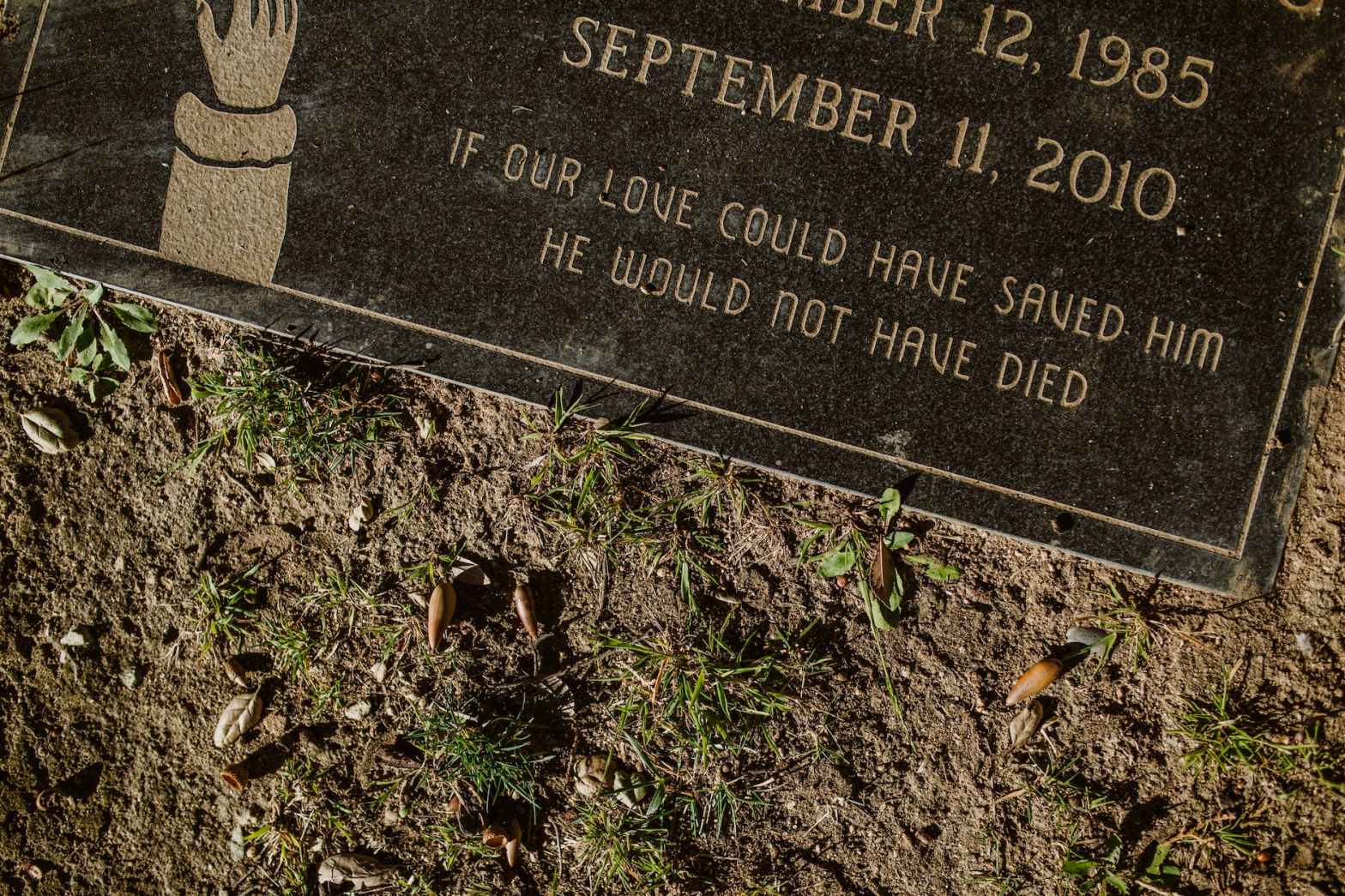
What Will They Write on Your Tombstone?

HE DIED TO NO ONE’S REGRET.”

The story concludes:

He reigned eight years in Jerusalem. He died to no one’s regret and was buried in the city of David but not in the tombs of the kings.” 2 Chronicles 21:20.

Do you ever think about what will be said about you when you are gone? I think about it all the time—and it helps me make better decisions.

“The day of death is better than the day of one’s birth. It is better to go to the house of mourning,… for that is the end of all men and the living should take it to heart.” Ecclesiastes 7:1-4.

Think about your death. What do you want people to say about you? How should your life be summed up? Finish this sentence about yourself (changing pronouns as needed):

“He lived his life ________________________________________________

____________________________________________________________

____________________________________________________________

___________________________________________________________.”

ΑΩ

Crime Doesn’t Pay.

More specifically, SIN does not pay.  Do not be deceived by appearances. God is watching and He will address it.  After all, He says, “vengeance is Mine. I will repay” Romans 12:19.

Do not be deceived, God is not mocked. Whatsoever a man soweth, that shall he also reap” Galatians 6:7.

We are called to love people, to offer a message of grace, hope, and redemption. But when you feel discouraged by war, or human trafficking, or child abuse, or worse, it helps to remember that we serve a God who SEES.  He sees and He can handle it.  He will punish the wrongdoer—and redeem the victims.  His amazing grace can transform your deepest hurt into your greatest victory. 

God, thank you for your love, justice, and grace.  Show us how to love people, while also demanding righteousness and integrity from ourselves and from others.

ΑΩ

“He Died to No One’s Regret.”

Most epitaphs say something nice, like “Loving Father and Husband,” or “Forever in Our Hearts,” or even “Sixth Generation Texan.” But the life of King Jehoram was summed up as:

HE DIED TO NO ONE’S REGRET” 2 Chronicles 21:20.

Imagine that on a tombstone!  What happened?  King Asa, great-grandson of King Solomon, followed the Lord.  His son, Jehoshaphat, was a good king, but made some compromises:

“Jehoshaphat walked in the way of his father Asa. He did what was right in the eyes of the Lord. The high places, however, were not removed…. Later, Jehoshaphat made an alliance with Ahaziah, King of Israel, who acted wickedly. Then Eliezer … prophesied against Jehoshaphat, saying ‘Because you have allied yourself with Ahaziah, the Lord has destroyed your works’” 1 Kings 22:32-37.

Jehoshaphat ignored the places for idol worship, and he made an alliance with the evil king Ahaziah.  He compromised—but you might say he was “pretty good.”  What happens when parents allow a little bit of sin, but remain “pretty good”? 

John Bisagno used to say, “What the parents allow in moderation, the children will allow in excess.”

Consider the next generation, the children of King Jehoshaphat:

“Jehoram, son of Jehoshaphat became king of Judah … He did what was evil in the Lord’s sight” 2 Kings 8:16-18. 

Okay, but how evil?  Maybe he had a few drinks and liked to drive too fast on the freeway?  No.

“When Jehoram had established himself over his father’s kingdom, he strengthened his position by killing with the sword all his brothers as well as some of the princes of Israel” 2 Chronicles 21:4.  (He killed all his brothers! What?!) Jehoram added much more to his list of sins and crimes before finally, HE DIED TO NO ONE’S REGRET.

As I have written elsewhere, we should not blame parents for the sins of their children.  Our duty is to give grace, not judgment. But while making your own decisions as a parent, knowing that your children are watching your every move, remember human nature:

“WHAT THE PARENTS ALLOW IN MODERATION, THE CHILDREN WILL ALLOW IN EXCESS.” 

ΑΩ

The Invisible.

When you feel outnumbered, do you remember that GOD IS FOR YOU?  Do you encourage yourself with that?  No matter how many betray you, desert you, or attack you—GOD IS FOR YOU.

When Elisha angered an enemy king, the king sent an army to the town of Dothan to capture the prophet.  The next morning Elisha’s servant saw the hills in every direction covered with soldiers. 

“‘Oh, my master, what are we to do?’

Elisha answered, ‘Don’t be afraid, for THOSE WITH US OUTNUMBER THOSE WHO ARE WITH THEM.’

Then Elisha prayed, “Lord, please open his eyes and let him see.”  So the Lord opened the servant’s eyes.  He looked and saw that the mountain was covered with HORSES AND CHARIOTS OF FIRE all around Elisha.”  2 Kings 6:15-17.

The MESSAGE BIBLE uses a great phrase for God.  What is traditionally translated “the Lord of Hosts,” Eugene Peterson (creator of the MESSAGE) called “the GOD OF THE ANGEL-ARMIES.”  There really are armies of angels, thousands upon thousands of heavenly beings any one of whom could overwhelm a human army. 

And those angel armies ARE FOR YOU. 

God and His armies are on your side.  But God remains invisible, angels are invisible, and we are to walk by faith not by sight.  Someday, maybe one time in your life, God will do what he did for Elisha’s servant and ‘open your eyes and let you see.’  But usually you will not see THE INVISIBLE.  But that doesn’t mean the invisible is not present and real. 

GOD IS WITH YOU, but invisible.  ANGELS PROTECT YOU, but you never see them.

Nevertheless: YOU ARE NOT ALONE. 

“THOSE WITH US OUTNUMBER THOSE WHO ARE WITH THEM.”

Dear God, remind us of Your presence.  You are the GOD WHO’S STANDING NEAR.  Remind us of the vast ANGEL ARMIES that defend us, help us, encourage us. Help us remember to exercise our faith, to claim these words and encourage our own hearts when we need to remember that You and Your angel armies are WITH US.

ΑΩ

Big Dreams and Big Sacrifices.

Naaman had a big dream. He had a skin condition and wanted to be healed. He came to Elisha, and was prepared to pay dearly. Naaman arrived with 750 pounds of silver, 150 pounds of gold, and 10 changes of clothes.

But when Naaman reached Elisha’s door, the prophet did not answer, but sent a messenger who told Naaman to go dip in the Jordan river seven times. Naaman was insulted and left angry. But his servants convinced him to give it a try:

My father, if the prophet had told you to do some great thing, would you not have done it? How much more should you do it when he tells you, ‘Wash and be clean’?” 2 Kings 5:13

So Naaman did it, and after the seventh time, “his skin was restored and became like the flesh of a small boy.” 2 Kings 5:13-14.

ΑΩ