“Behold my servant, … in whom my soul delights;
I have put my spirit upon him:
he shall bring forth judgment to the Gentiles.
… A bruised reed shall he not break,
and the smoking flax shall he not quench:
… I the Lord … will give thee
for a light to the Gentiles;
to open the blind eyes,
to bring out the prisoners from the prison,
and them that sit in darkness out of the prison house” Isaiah 42:1-7.
When everyone around me starts making their super-specific predictions about the End Times, my go-to response is to point out that not a single Bible prophet completely understood the Messianic prophecies. Not one—not Isaiah, Daniel, Jeremiah, David, Moses—not one person whose words predicted a coming Messiah understood that He would come twice, first as a Suffering Servant, and then a second time as a Conquering King. And because the prophets were unable to tease out that distinction, the priests and rabbis who lived in the time of Christ also missed it. Only Jesus Himself understood.
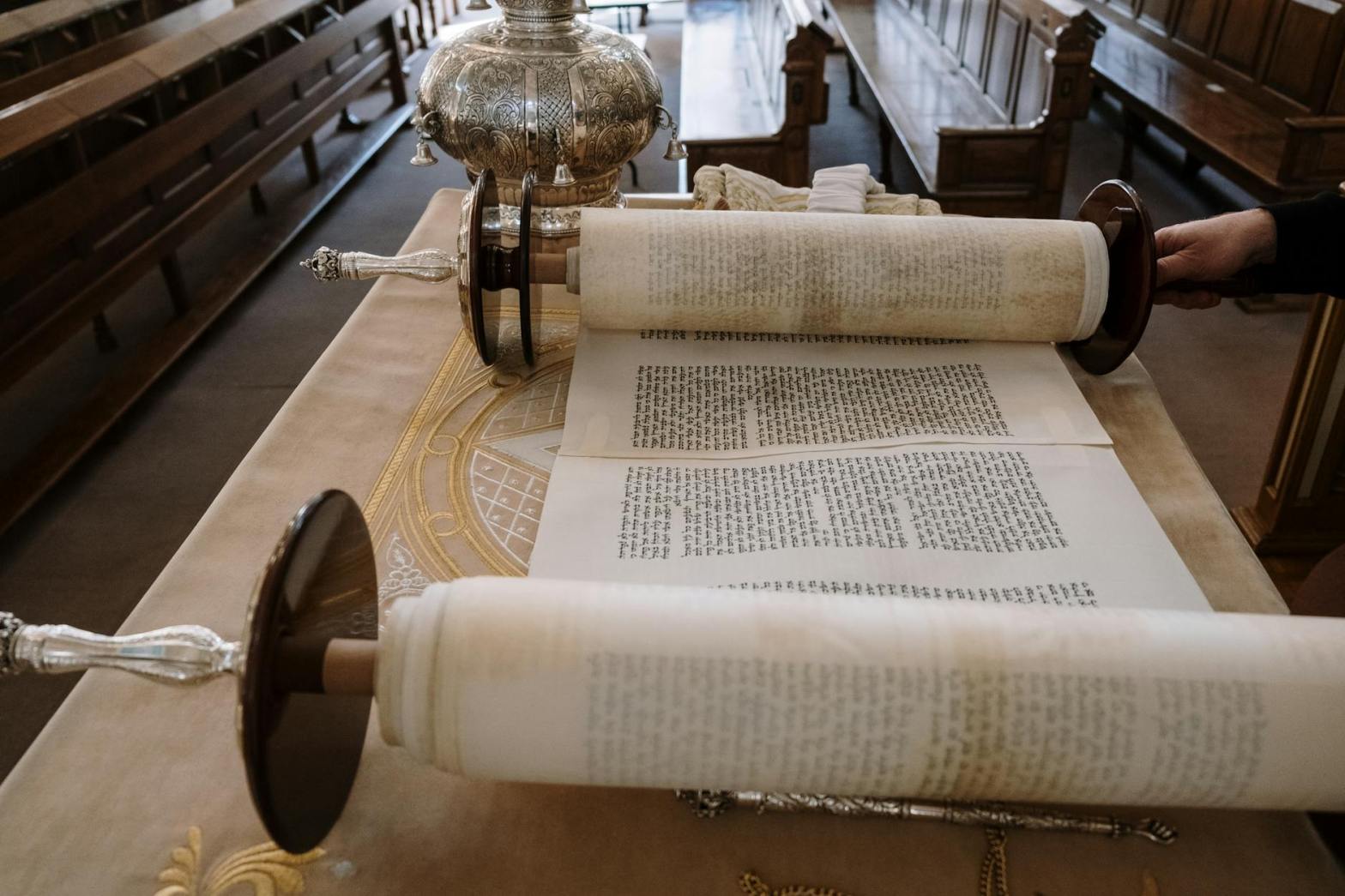
I sometimes imagine a young Jesus, perhaps a teenager, studying the scroll of Isaiah and understanding for the first time that the Messiah would have to die on a cross first, and return as a Conquering King later. He would live His entire life alone with that revelation. (Can you imagine carrying that knowledge around with you?)
And thus, my point about the End Times: if God did not reveal the full meaning of all Messianic prophecies to even the prophets writing those prophecies, perhaps we should not be too dogmatic about our interpretations of End Times prophecies.
But there is another point to be made about Old Testament prophecy. You know who else did not understand Messianic prophecy? Satan.
After all, the crucifixion of Jesus provided salvation to untold millions. In fact, the Bible makes clear that crucifixion was the only path to salvation. Had Satan understood that the crucifixion would be the cause of his ultimate defeat, he would have made sure Jesus was not crucified. Consider Paul’s letter to the church at Corinth:
“We declare God’s wisdom, a mystery that has been hidden and that God destined for our glory before time began. None of the rulers of this age understood it, for if they had, they would not have crucified the Lord of glory” 1 Corinthians 2:7-8.
Some writers and preachers have argued the phrase “rulers of this age” includes both earthly political powers and invisible spiritual powers. One such argument was published by the late Michael Heiser; I found it persuasive enough to quote at length:
“Have you ever wondered how it was that the disciples never seemed to get the things that Jesus told them about himself? Think about it. When Jesus told them that it was time for him to go to Jerusalem and die, it angered and scared them (Matthew 17:22-23; Mark 9:30-32). No one replied, ‘That’s right—I read that in the Scriptures.’ Peter even rebuked Jesus for saying such a thing (Matthew 16:21-23). The truth is that the disciples had little sense of what was going on. Even after the resurrection their minds had to be supernaturally enabled to get the message (Luke 24:44-45).
“We shouldn’t be too hard on the disciples. They weren’t dumb. Their ignorance was the result of God’s deliberate plan to conceal messianic prophecy. Paul talked about the need for that when writing to the Corinthians: ‘But we speak the hidden wisdom of God in a mystery, which God predestined before the ages for our glory, which none of the rulers of this age knew. For if they had known it, they would not have crucified the Lord of glory’ (1 Corinthians 2:7-8). Had Satan and the other powers of darkness known that instigating people to kill the Messiah was precisely what God had designed to accomplish their own doom, they never would never have done it. The gospels are clear that Satan and demons knew the prophesied son of David had come (Matthew 8:28-29; Luke 4:31-35). The Old Testament was clear that would happen at some point. But what it concealed was the plan of redemption.
“Let’s take Isaiah 53 as an example. It’s clear that God’s servant would suffer for sins—but the Hebrew word translated “messiah” (mashiach) never occurs in the passage. It occurs only once in all of Isaiah—and then it is used of Cyrus, a pagan king. The word never occurs in Jeremiah or Ezekiel, and is only found once in the Minor Prophets (Habbakuk 3:13) where it speaks of the nation. The occurrences in the Psalms refer to Israel’s king. Only a handful of them are quoted by New Testament authors of the messianic king—but their application only became clear after the fact of Jesus’ death and resurrection. Even the label “son of God” isn’t helpful since Israel is called God’s son in Exodus 4:22-23, and kings like David got that title, too.
“As shocking as it sounds, there isn’t a single verse in the Old Testament that refers to a suffering messiah (mashiach) who would be God incarnate, die, and rise again.
“That’s deliberate. What we do get in the Old Testament are all the pieces of that profile scattered in dozens, even hundreds of places. The portrait could only be discerned after the fact. The plan of salvation was a cosmic chess game that had to be won. The rest of prophecy figures to work out the same way—fulfilments hidden in plain sight.” – Michael Heiser, The 60 Second Scholar: 100 Insights That Illumine the Bible[1]
Dear God, how amazing to think that mysteries hidden for centuries have been revealed to us. Thank You for Your amazing plan of salvation! It is incredible to consider what Jesus endured for His people. Thank You for Your love and compassion and for going into battle for us!
AΩ.
[1] https://www.cjfm.org/blog/2019/10/31/if-it-so-obvious-jesus-messiah-why-didnt-disciples-understand-it/#:~:text=We%20shouldn’t%20be%20too,it%20speaks%20of%20the%20nation.
 Household Words: